The anti-war left's favorite Congressman, Jack Murtha, is at it again. Yesterday, the Pennsylvania Democrat alleged that U.S. Marines committed serious atrocities against Iraqi civilians in an incident near Haditha on 19 November of last year.
According to Congressman Murtha, Marines from Kilo Company, 3rd Battalion, 1st Marines (based at Camp Pendleton, CA), "killed innocent civilians in cold blood" after responding to a roadside bomb attack near Haditha that killed one Marine. An Iraqi human rights group claims that Marines stormed houses near the bombing site, throwing grenades and shooting civilians. The human rights group claims that at least 15 Iraqis were killed in the attack; Time magazine carried a report on the incident in its 27 March edition.
However, Murtha assures us that what actually happened at Haditha is "much worse" than what was described by Time. But careful readers will note that Murtha (in typical fashion) offers no details to support his accusations. Officially, the Marine Corps has relieved three officers of their duties in the wake of the incident, and an official investigation is on-going. But how did John Murtha get his information, and how reliable is it? Has he spoken with Marine and Navy investigators? Read interview transcripts? Reviewed forensic evidence? Heard rumors in the bar at the Army-Navy Club? Murtha won't say, and when pressed for details by Army Times, his press representative couldn't offer any amplifying details.
Sadly, such tactics are part-and-parcel of the Murtha approach. Make a sensational claim and grab some press headlines, knowing that the drive-by media won't question your charges. Afterall, Congressman Murtha served in Vietnam (so did John Kerry!), and he's a retired Colonel in the Marine Corps Reserve. In the eyes of the MSM, that makes him an unqualified expert on all matters relating to the U.S. military and ground combat in Iraq. Just a few weeks back, Jack Murtha was telling anyone who would listen that U.S. ground forces are "hard broke" after three-plus years of combat in Iraq and Afghanistan. And once again, the charge was long on sensationalism, short on specifics. Since then, that "broken" force has launched a series of major operations against terrorists in Iraq, producing some notable successes. When that happened, Murtha was conspiciously silent.
If Murtha has information that might be of use to Marine and NCIS investigators, he knows how to contact them. On the other hand, if he's trying to meddle in an on-going investigation, he needs to shut up. Should any Marines face disciplinary action for the Haditha incident--and that is hardly assured--a smart defense attorney can mere cite Murtha's remarks as evidence that potential court-martial panels have been hopelessly prejudiced. A military judge might not agree with that assessment, but the impact of Murtha's comments--echoed by his buddies in the news media--could form the foundation for a legal appeal.
But that pre-supposes that atrocities were committed in Haditha last November. So far, all we have are allegation, and an on-going investigation. As a retired Marine Colonel, Jack Murtha supposedly knows enough to keep his yap shut and let the process work. But then again, doing things by the book wouldn't sustain his reputation as the media's favorite anti-war Congressman--never mind the fact that he's wrong far more often than he's right. And that raises another question: let's suppose that those Marine officers are exonerated for their actions at Haditha. If that happens, will Jack Murtha apologize to his "fellow" Marines?
Thursday, May 18, 2006

Tuesday, May 16, 2006
Hugo's Used Fighter Sale
Venezuelan President Hugo Chavez is taking another poke at the Uncle Sam. He's threatening to sell his nation's small fleet of F-16 fighters to Iran, apparently in retaliation for a U.S. ban on arms sales to his government.
General Alberto Mueller, an advisor to Chavez, has recommended to the defense minister that Venezuela sell its 21 F-16s to another country. Mueller said he thought it was worthwhile to consider "the feasibility of a negotiation with Iran for the sale of those planes." The comments came one day after the U.S. announced a ban on additional arms sales to Venezuela, which totaled $34 million last year. Before the ban was announced, Washington had been putting a slow squeeze on Venezuela's access to American military technology. Previously, the U.S. had refused Caracas's request for upgrades to its F-16s, the most capable fighter in the Venezuelan inventory. Members of the Chavez government have also suggested that Venezuela might "share" its F-16s with Cuba, in response to the U.S. arms ban.
Short of military action, there really isn't much we can do to block the F-16 transfer to Iran or Cuba, if Chavez decides to go ahead with the deal. But careful observers will note that neither Tehran or Havana is exactly jumping up and down at the prospect of obtaining Yanqui F-16s.
And with good reason. The F-16 is more than a sleek, 80s-era fighter jet. It's a complete weapons system. If you plan to operate the F-16, you'll need simulators, extensive training, infrastructure upgrades and a massive inventory of spare parts, among other things. Needless to say, those "extras" don't come cheap. Beyond that, there's the question of where you can actually obtain the stuff you need to operate an F-16 squadron. Limited quantities of spare parts and munitions can be purchased on the gray market, and Venezuela could provide some assistance in flight and maintenance instruction; but to make the jets fully operational, a customer needs access to U.S. contractor support and technical data, which (in turn) requires approval of the U.S. government. Obviously, George Bush and Don Rumsfeld aren't about to sign off on an F-16 transfer to Iran or Cuba.
What about other countries who have F-16s? Well, if those countries want continued access to U.S. military hardware, they can't afford to get caught in an illegal arms transfer involving a pariah state. True, there are some exceptions to this rule (Israel's transfer of F-16 technology to China in the Lavi/F-10 program comes to mind), but it's doubtful that any current U.S. customer--especially those with a desire for future arms sales--would accept the risks entailed in supporting an illegal sale of the Venezuelan jets.
Additionally, the Iranians and Cubans already have access to fourth-generation fighter technology, thanks to their acquisition of MiG-29 FULCRUMs from Russia. The FULCRUMs y in the Iranian and Cuban inventories are, in some ways, more sophisticated than the early-generation F-16s that Hugo is trying to unload. Iran and Cuba have something else in common, too: both have had difficulty in keeping their FULCRUMs in the air, despite full access to Russian training and technical support. Without similar assistance for the F-16s, those jets would become little more than ramp decorations at some Iranian or Cuban base, slowly rusting in the sun.
Case in point: remember those Iraqi aircraft that were flown to Iran at the end of Operation Desert Storm? To date, only a handful of those fighters have returned to operational service, and only with support from the Russians. French-built Iraqi aircraft (notably Mirage F-1s) have fared even worse, spending years on the tarmac before the Iranians managed to get a few airborne. Today, most are back on the ramp, grounded by a lack of spare parts, maintenance and qualified pilots.
It's also worth remembering that simply having a fourth-generation fighter doesn't give you state-of-the-art employment capabilities. Tactically, Iranian and Cuban fighter pilots are no match for their western counterparts, and that axiom holds true for whatever airframe they might operate, including the F-16. It takes years of effort to develop the doctrine and tactics required to maximize the F-16's combat capabilities, and that's something the Venezuelans simply don't have.
Mr. Chavez may be having a fire sale down at the ol' used fighter lot, but he's going to find a dearth of serious buyers, even among our adversaries. Havana and Tehran may kick the tires a few times, but they're unlikely to conclude a deal to acquire the F-16s. Like other countries, Cuba and Iran want useable combat systems--not expensive toys that simply fill up an aircraft parking ramp. One year from now, you're likely to find Hugo's F-16s in the same spot they currently occupy--on the tarmac at a Venezuelan Air Force base.
General Alberto Mueller, an advisor to Chavez, has recommended to the defense minister that Venezuela sell its 21 F-16s to another country. Mueller said he thought it was worthwhile to consider "the feasibility of a negotiation with Iran for the sale of those planes." The comments came one day after the U.S. announced a ban on additional arms sales to Venezuela, which totaled $34 million last year. Before the ban was announced, Washington had been putting a slow squeeze on Venezuela's access to American military technology. Previously, the U.S. had refused Caracas's request for upgrades to its F-16s, the most capable fighter in the Venezuelan inventory. Members of the Chavez government have also suggested that Venezuela might "share" its F-16s with Cuba, in response to the U.S. arms ban.
Short of military action, there really isn't much we can do to block the F-16 transfer to Iran or Cuba, if Chavez decides to go ahead with the deal. But careful observers will note that neither Tehran or Havana is exactly jumping up and down at the prospect of obtaining Yanqui F-16s.
And with good reason. The F-16 is more than a sleek, 80s-era fighter jet. It's a complete weapons system. If you plan to operate the F-16, you'll need simulators, extensive training, infrastructure upgrades and a massive inventory of spare parts, among other things. Needless to say, those "extras" don't come cheap. Beyond that, there's the question of where you can actually obtain the stuff you need to operate an F-16 squadron. Limited quantities of spare parts and munitions can be purchased on the gray market, and Venezuela could provide some assistance in flight and maintenance instruction; but to make the jets fully operational, a customer needs access to U.S. contractor support and technical data, which (in turn) requires approval of the U.S. government. Obviously, George Bush and Don Rumsfeld aren't about to sign off on an F-16 transfer to Iran or Cuba.
What about other countries who have F-16s? Well, if those countries want continued access to U.S. military hardware, they can't afford to get caught in an illegal arms transfer involving a pariah state. True, there are some exceptions to this rule (Israel's transfer of F-16 technology to China in the Lavi/F-10 program comes to mind), but it's doubtful that any current U.S. customer--especially those with a desire for future arms sales--would accept the risks entailed in supporting an illegal sale of the Venezuelan jets.
Additionally, the Iranians and Cubans already have access to fourth-generation fighter technology, thanks to their acquisition of MiG-29 FULCRUMs from Russia. The FULCRUMs y in the Iranian and Cuban inventories are, in some ways, more sophisticated than the early-generation F-16s that Hugo is trying to unload. Iran and Cuba have something else in common, too: both have had difficulty in keeping their FULCRUMs in the air, despite full access to Russian training and technical support. Without similar assistance for the F-16s, those jets would become little more than ramp decorations at some Iranian or Cuban base, slowly rusting in the sun.
Case in point: remember those Iraqi aircraft that were flown to Iran at the end of Operation Desert Storm? To date, only a handful of those fighters have returned to operational service, and only with support from the Russians. French-built Iraqi aircraft (notably Mirage F-1s) have fared even worse, spending years on the tarmac before the Iranians managed to get a few airborne. Today, most are back on the ramp, grounded by a lack of spare parts, maintenance and qualified pilots.
It's also worth remembering that simply having a fourth-generation fighter doesn't give you state-of-the-art employment capabilities. Tactically, Iranian and Cuban fighter pilots are no match for their western counterparts, and that axiom holds true for whatever airframe they might operate, including the F-16. It takes years of effort to develop the doctrine and tactics required to maximize the F-16's combat capabilities, and that's something the Venezuelans simply don't have.
Mr. Chavez may be having a fire sale down at the ol' used fighter lot, but he's going to find a dearth of serious buyers, even among our adversaries. Havana and Tehran may kick the tires a few times, but they're unlikely to conclude a deal to acquire the F-16s. Like other countries, Cuba and Iran want useable combat systems--not expensive toys that simply fill up an aircraft parking ramp. One year from now, you're likely to find Hugo's F-16s in the same spot they currently occupy--on the tarmac at a Venezuelan Air Force base.
The Next "Big" Spy Scandal
There's a spy scandal brewing in southern California, but it's received little attention, except from reporters like Bill Gertz of the Washington Times.
The case began as a counter-intelligence investigation, and resulted in the arrest of a Chinese-American defense contractor, Chi Mak; his wife, Rebecca Chiu, and his brother, Tai Mak. At the time of their arrest last October, Mak and his relatives were charged with failing to register as Chinese government agents. While that's not an espionage charge, it did give federal authorities an opportunity to keep the Mak clan from fleeing the country while the investigation continues.
Now, prosecutors are apparently prepared to charge Chi Mak, Rebecca Chiu, Tai Mak and a fourth family member with conspiracy to export defense articles and attempted unlawful export of defense articles. Additionally, Chi Mak will be indicted on charges of unlawfully exporting defense articles and gathering defense information, an espionage charge. At the time of his arrest, Chi Mak was working as an electrical engineer for on Power Paragon, a Los Angeles-based defense contractor.
Authorities believe the Mak clan passed extremely sensitive defense information to the Chinese government, including data on the new Virginia-class attack submarine, and a new electro-magnetic catapult for aircraft carriers. Such information would represent an intelligence bonanza for the Chinese Navy, making it easier for them to detect (and track) U.S. subs, while improving their own sub designs. Beijing's carrier aviation program is still in its infancy, but access to electro-magnetic catapult designs could allow the Chinese to leap-frog ahead, by-passing steam-powered catapults in favor of more advanced technology.
Federal investigators reportedly found "thousands of pages" of defense documents at the home of Chi Mak after his arrest. The sensitive nature of that information led to the new charges, which will be made public as early as this week.
The Mak case highlights the espionage threat posed by the PRC, and its agents operating inside this country. Since the early 1980s, Beijing has deliberately targeted high-tech U.S. weaponry and related technology, and they've enjoyed some success. As detailed in such books as "Year of the Rat" and Mr. Gertz's own, "The China Threat," Beijing has acquired design data for advanced nuclear warheads, MIRV technology for ballistic missiles, and essentially copied our F-16 fighter, through the Israeli LAVI program. The activities of the Mak clan suggest that Beijing's espionage campaign is continuing, unabated. Tai Mak, who apparently served as a courier to Beijing, was carrying an encrypted disk with defense information when he was arrested last year at LAX.
Prosecutors are apparently moving slowly in this case, mindful of security concerns, the Wen Ho Lee debacle, and security concerns surrounding the matter. But I'll go out on a limb, and predict that more indictments are forthcoming. It will be particularly interesting to trace the employment of Chi Mak. As a defense contractor, he likely held at least a "Secret" clearance, and (given the nature of the information recovered from his home), may have held a "Top Secret" clearance and/or access to special access programs. The Virginia represents "state-of-the-art" U.S. sub technology, and disclosures about its capabilities could prove particularly damaging.
The case began as a counter-intelligence investigation, and resulted in the arrest of a Chinese-American defense contractor, Chi Mak; his wife, Rebecca Chiu, and his brother, Tai Mak. At the time of their arrest last October, Mak and his relatives were charged with failing to register as Chinese government agents. While that's not an espionage charge, it did give federal authorities an opportunity to keep the Mak clan from fleeing the country while the investigation continues.
Now, prosecutors are apparently prepared to charge Chi Mak, Rebecca Chiu, Tai Mak and a fourth family member with conspiracy to export defense articles and attempted unlawful export of defense articles. Additionally, Chi Mak will be indicted on charges of unlawfully exporting defense articles and gathering defense information, an espionage charge. At the time of his arrest, Chi Mak was working as an electrical engineer for on Power Paragon, a Los Angeles-based defense contractor.
Authorities believe the Mak clan passed extremely sensitive defense information to the Chinese government, including data on the new Virginia-class attack submarine, and a new electro-magnetic catapult for aircraft carriers. Such information would represent an intelligence bonanza for the Chinese Navy, making it easier for them to detect (and track) U.S. subs, while improving their own sub designs. Beijing's carrier aviation program is still in its infancy, but access to electro-magnetic catapult designs could allow the Chinese to leap-frog ahead, by-passing steam-powered catapults in favor of more advanced technology.
Federal investigators reportedly found "thousands of pages" of defense documents at the home of Chi Mak after his arrest. The sensitive nature of that information led to the new charges, which will be made public as early as this week.
The Mak case highlights the espionage threat posed by the PRC, and its agents operating inside this country. Since the early 1980s, Beijing has deliberately targeted high-tech U.S. weaponry and related technology, and they've enjoyed some success. As detailed in such books as "Year of the Rat" and Mr. Gertz's own, "The China Threat," Beijing has acquired design data for advanced nuclear warheads, MIRV technology for ballistic missiles, and essentially copied our F-16 fighter, through the Israeli LAVI program. The activities of the Mak clan suggest that Beijing's espionage campaign is continuing, unabated. Tai Mak, who apparently served as a courier to Beijing, was carrying an encrypted disk with defense information when he was arrested last year at LAX.
Prosecutors are apparently moving slowly in this case, mindful of security concerns, the Wen Ho Lee debacle, and security concerns surrounding the matter. But I'll go out on a limb, and predict that more indictments are forthcoming. It will be particularly interesting to trace the employment of Chi Mak. As a defense contractor, he likely held at least a "Secret" clearance, and (given the nature of the information recovered from his home), may have held a "Top Secret" clearance and/or access to special access programs. The Virginia represents "state-of-the-art" U.S. sub technology, and disclosures about its capabilities could prove particularly damaging.
Monday, May 15, 2006
Boots on the Ground
That over-used phrase has been deemed the key to securing Iraq. According to various pundits, the U.S. needs more troops on the ground to control the countryside, and bring the insurgency under control, once and for all. While additional troops would have certainly been useful, I can make the case that our troops have performed masterfully; if you don't believe me, just read those recently-captured terrorist letters where the insurgents describe their current activities as little more than a nuisance.
Funny, but the "boots on the ground" coalition won't apply the same principle to securing our southern border. President Bush's tepid plan to assigned 5,000 National Guard members to border duties (on a temporary basis) has been met with predictable "concerns" about our over-stretched military, and calls to further strengthen the Border Patrol, rather than deploy military personnel. Nebraska Senator Chuck Hagel, the junior half of the McCain-Hagel caucus, weighed in:
“We’ve got National Guard members on their second, third and fourth tours in Iraq,” Hagel said. “We have stretched our military as thin as we have ever seen it in modern times. And what in the world are we talking about here, sending a National Guard that we may not have any capacity to send up to or down to protect borders? That’s not their role.”
Perhaps I'm mistaken, but I do seem to recall something about ensuring domestic tranquility and providing for the common defense in the preamble to the Constitution. And, given the chaos that exists along our southern border, some sort of military presence seems essential to satisfy those constitutional requirements. But folks like Senator Hagel would prefer to spend a few more years recruiting (and training) more Border Patrol agents. By the time we achieve that goal, or more accurately, if we achieve that goal, another 3 or 4 million illegal immigrants will have crossed our borders, and making the crisis even worse.
Hagel's concerns actually seem premature, since President Bush will apparently propose the use of military personnel in support roles, including surveillance of the border. The work of actually trying to stop the influx of illegals will remain in the hands of overtaxed border patrol agents. In other words, we may have better information on the location and numbers of illegals attempting to enter our country, but we still won't have the necessary resources to stop them. And this is an improvement?
While the addition of surveillance assets will certainly help--assuming we can get the information into the hands of the border patrol in a timely manner--Mr. Bush's proposal already sounds like most of his immigration proposals: half-hearted, poorly conceived, and calculated with more concern about national politics than national security. The Immigration Blog has more.
Senator Hagel does have one thing in common with Mr. Bush, however. When it comes to immigration, both are woefully out of touch with the beliefs and concerns of most Americans. And, both will pay a political price for those views.
***
Postscript: If Senator Hagel doubts the importance of this issue, he might want to take a gander at the results of last week's GOP gubenatorial primary in his home state. GOP Congressman (and legendary Nebraska football coach) Tom Osborne was expected to easily defeat Governor Dave Heineman for the Republican nomination, then coast to victory against a Democratic opponent in the fall. Osborne had never received less than 80% of the vote in his past Congressional races; one of his political rivals described him as "Nebraska's God."
But Heineman defeated Osborne, in a race that hinged on the immigration issue. Heineman recently vetoed a bill that provided in-state tuition for illegal aliens at Nebraska's colleges and universities--a measure that Tom Osborne supported. Tuition rates for illegals is, admittedly, a relatively minor part of the immigration issue, but it was enough to send Tom Osborne packing. Polipundit is the only major political blog (so far) that has highlighted Osborne's stunning defeat, and the immigration issue that sealed his fate.
Funny, but the "boots on the ground" coalition won't apply the same principle to securing our southern border. President Bush's tepid plan to assigned 5,000 National Guard members to border duties (on a temporary basis) has been met with predictable "concerns" about our over-stretched military, and calls to further strengthen the Border Patrol, rather than deploy military personnel. Nebraska Senator Chuck Hagel, the junior half of the McCain-Hagel caucus, weighed in:
“We’ve got National Guard members on their second, third and fourth tours in Iraq,” Hagel said. “We have stretched our military as thin as we have ever seen it in modern times. And what in the world are we talking about here, sending a National Guard that we may not have any capacity to send up to or down to protect borders? That’s not their role.”
Perhaps I'm mistaken, but I do seem to recall something about ensuring domestic tranquility and providing for the common defense in the preamble to the Constitution. And, given the chaos that exists along our southern border, some sort of military presence seems essential to satisfy those constitutional requirements. But folks like Senator Hagel would prefer to spend a few more years recruiting (and training) more Border Patrol agents. By the time we achieve that goal, or more accurately, if we achieve that goal, another 3 or 4 million illegal immigrants will have crossed our borders, and making the crisis even worse.
Hagel's concerns actually seem premature, since President Bush will apparently propose the use of military personnel in support roles, including surveillance of the border. The work of actually trying to stop the influx of illegals will remain in the hands of overtaxed border patrol agents. In other words, we may have better information on the location and numbers of illegals attempting to enter our country, but we still won't have the necessary resources to stop them. And this is an improvement?
While the addition of surveillance assets will certainly help--assuming we can get the information into the hands of the border patrol in a timely manner--Mr. Bush's proposal already sounds like most of his immigration proposals: half-hearted, poorly conceived, and calculated with more concern about national politics than national security. The Immigration Blog has more.
Senator Hagel does have one thing in common with Mr. Bush, however. When it comes to immigration, both are woefully out of touch with the beliefs and concerns of most Americans. And, both will pay a political price for those views.
***
Postscript: If Senator Hagel doubts the importance of this issue, he might want to take a gander at the results of last week's GOP gubenatorial primary in his home state. GOP Congressman (and legendary Nebraska football coach) Tom Osborne was expected to easily defeat Governor Dave Heineman for the Republican nomination, then coast to victory against a Democratic opponent in the fall. Osborne had never received less than 80% of the vote in his past Congressional races; one of his political rivals described him as "Nebraska's God."
But Heineman defeated Osborne, in a race that hinged on the immigration issue. Heineman recently vetoed a bill that provided in-state tuition for illegal aliens at Nebraska's colleges and universities--a measure that Tom Osborne supported. Tuition rates for illegals is, admittedly, a relatively minor part of the immigration issue, but it was enough to send Tom Osborne packing. Polipundit is the only major political blog (so far) that has highlighted Osborne's stunning defeat, and the immigration issue that sealed his fate.
Better Get Some New Cellphones
That's the admonition of an "unnamed" government official (surprise, suprise) to ABC investigative journalist Brian Ross. The source tells Ross that the government is tracking phone calls made by reporters, in an effort to root out unauthorized leaks within the government. According to Ross, he does not know how the government determined who he calls, or whether his phone records (or those of other journalists) were provided by phone companies, as part of the recently-disclosed NSA data-mining effort.
The MSM will scream long and loud about this one, but let's keep things in perspective. Under existing federal statutes, intelligence officials who divulge sensitive information to the press are likely in violation of the law. The unauthorized leak of such data results in a referral from the intelligence agency to the Justice Department, which launches a criminal probe. Federal prosecutors then have the right to gather and subpoena evidence in support of that effort, including phone records. If authorities discover a series of calls between the office phone or cell phone of an intelligence officer and Brian Ross of ABC News, well, that could certainly be relevant in identifying and prosecuting leakers.
I'm not a lawyer, but at first blush, there doesn't appear to be anything illegal about this practice, particularly if the acquisition of records followed a criminal referral to the Justice Department. The media is anxious to connect the warning to Ross as part of the NSA program, but I'm guessing that the records in question are, indeed, the result of justice department investigations into unauthorized leaks. That would indicate that the investigation is moving along quickly, and indictments of suspected leakers can be expected in the coming months. As for Mr. Ross (and other journalists), they might want to prepare for a grand jury appearance. I'm sure that federal prosecutors have lots of questions about those calls to their buddies in the intelligence community.
P.S.--Given the government's apparent interest in Mr. Ross's phone records, there's a certain irony in the photograph that accompanies his postings at "The Blotter. I'm sure that some our Photoshop artists in the blogosphere will have a lot of fun with Mr. Ross and his cellphone. When you post them, send me a link.
The MSM will scream long and loud about this one, but let's keep things in perspective. Under existing federal statutes, intelligence officials who divulge sensitive information to the press are likely in violation of the law. The unauthorized leak of such data results in a referral from the intelligence agency to the Justice Department, which launches a criminal probe. Federal prosecutors then have the right to gather and subpoena evidence in support of that effort, including phone records. If authorities discover a series of calls between the office phone or cell phone of an intelligence officer and Brian Ross of ABC News, well, that could certainly be relevant in identifying and prosecuting leakers.
I'm not a lawyer, but at first blush, there doesn't appear to be anything illegal about this practice, particularly if the acquisition of records followed a criminal referral to the Justice Department. The media is anxious to connect the warning to Ross as part of the NSA program, but I'm guessing that the records in question are, indeed, the result of justice department investigations into unauthorized leaks. That would indicate that the investigation is moving along quickly, and indictments of suspected leakers can be expected in the coming months. As for Mr. Ross (and other journalists), they might want to prepare for a grand jury appearance. I'm sure that federal prosecutors have lots of questions about those calls to their buddies in the intelligence community.
P.S.--Given the government's apparent interest in Mr. Ross's phone records, there's a certain irony in the photograph that accompanies his postings at "The Blotter. I'm sure that some our Photoshop artists in the blogosphere will have a lot of fun with Mr. Ross and his cellphone. When you post them, send me a link.
The Case for Domestic Spying
The MSM is certainly doing it's part to sustain the kerfuffle over the NSA's domestic surveillance efforts. USA Today is out with a poll suggesting that a majority of Americans, at second glance, have serious reservations about the agency's use of phone company records to establish patterns of activity that may be linked to possible terrorist cells. Last week, the paper was the first media outlet to reveal the existence of the data-mining program, which doesn't actually monitor phone calls, but (instead), looks for patterns in calls that are made and received within the United States. USA Today's survey comes on the heels of a poll by ABC News and the Washington Post which revealed strong support for the program.
It's no coincidence that the paper chose to do it's own survey, and release the results at this particular time. In the wake of last week's "exclusive" on the NSA data-mining effort, USA Today apparently wanted to increase public concerns about the program, which the paper suggests is a threat to civil liberties. Such perceptions will likely take center stage at the upcoming confirmation hearings of General Michael Hayden, President Bush's nominee to run the CIA. As a former Director of the National Security Agency (NSA), Hayden was instrumental in establishing both programs in the wake of 9-11. Opponents believe that Hayden's support for the surveillance and data-mining programs may be enough to torpedo his nomination.
John Hinderaker at Powerline has an excellent dissection of this media technique, "First Mislead, Then Poll." As he notes, the NSA surveillance program (disclosed by The New York Times last December) has been widely described as a domestic wire-tapping or spying program. In reality, the effort is aimed at international communications; at least one of the callers must be outside the CONUS. The data-mining operation utilizes information that is widely available; do a Google search on "phone records," and look a the number of services that pop up, offering to provide individual calling records, at a price.
So, what the MSM describes as a "domestic spying program" is actually an international collection effort, well within the NSA's legal and operational authority. And the phone records controversy is based on data that's available to almost anyone with a credit or debit card. But that hasn't stopped the press from couching the program in terms of a sinister effort ("a massive Pentagon database, containing the records of billions of phone calls made by ordinary citizens"), and the data-mining effort will quickly morph into another "secret spy program," just in time for the Hayden confirmation hearings, and the next round of Bush job performance polls.
From an ethical standpoint, I've always had problems with the media's habit of running a poll to generate a story. But it's even more disingenuous to run polls and write stories based on information that is misleading, and appears to support a particular political agenda. Consider the phrasing of some of the poll questions:
4. Is that mainly because you do not think the program seriously violates Americans’ civil liberties, (or is it mainly because) you think investigating terrorism is the more important goal, even if it violates some Americans’ civil liberties?
5. Do you think there would ever be circumstances in which it would be right for the government to create a database of telephone records, or would it not be right for the government to do this under any circumstances?
Not just "violates," but "seriously violates" Americans civil liberties. Talk about a leading question. Or, consider the reference to the phone records database. Never mind the fact that the government has maintained such databases for years, and they've been instrumental in convicting organized crime bosses--or, that such data is widely available to anyone with an internet connection or mailing address who wants it. So much for context.
These media techniques are also dangerous because they affect a much wider (and even more important) debate on the issue of domestic spying. Judge Richard Posner, one of the brightest minds on the federal bench (and an expert on intelligence) has a new book on the subject, due out this week. In his book (and an op-ed in today's Opinion Journal) , Judge Posner makes a persuasive case for a domestic spy agency, to conduct the type of intelligence work the MSM seems so dead-set against. As Posner notes, the lack of such an agency creates a serious gap in intelligence collection efforts, and our ability to wage a successful war on terror. We urgently need a reasoned, public debate on whether such an agency should be established, and its compatibility with our civil liberties. Unfortunately, outlets like USA Today seem content to poison the well of public sentiment before thta debate can take place.
It's no coincidence that the paper chose to do it's own survey, and release the results at this particular time. In the wake of last week's "exclusive" on the NSA data-mining effort, USA Today apparently wanted to increase public concerns about the program, which the paper suggests is a threat to civil liberties. Such perceptions will likely take center stage at the upcoming confirmation hearings of General Michael Hayden, President Bush's nominee to run the CIA. As a former Director of the National Security Agency (NSA), Hayden was instrumental in establishing both programs in the wake of 9-11. Opponents believe that Hayden's support for the surveillance and data-mining programs may be enough to torpedo his nomination.
John Hinderaker at Powerline has an excellent dissection of this media technique, "First Mislead, Then Poll." As he notes, the NSA surveillance program (disclosed by The New York Times last December) has been widely described as a domestic wire-tapping or spying program. In reality, the effort is aimed at international communications; at least one of the callers must be outside the CONUS. The data-mining operation utilizes information that is widely available; do a Google search on "phone records," and look a the number of services that pop up, offering to provide individual calling records, at a price.
So, what the MSM describes as a "domestic spying program" is actually an international collection effort, well within the NSA's legal and operational authority. And the phone records controversy is based on data that's available to almost anyone with a credit or debit card. But that hasn't stopped the press from couching the program in terms of a sinister effort ("a massive Pentagon database, containing the records of billions of phone calls made by ordinary citizens"), and the data-mining effort will quickly morph into another "secret spy program," just in time for the Hayden confirmation hearings, and the next round of Bush job performance polls.
From an ethical standpoint, I've always had problems with the media's habit of running a poll to generate a story. But it's even more disingenuous to run polls and write stories based on information that is misleading, and appears to support a particular political agenda. Consider the phrasing of some of the poll questions:
4. Is that mainly because you do not think the program seriously violates Americans’ civil liberties, (or is it mainly because) you think investigating terrorism is the more important goal, even if it violates some Americans’ civil liberties?
5. Do you think there would ever be circumstances in which it would be right for the government to create a database of telephone records, or would it not be right for the government to do this under any circumstances?
Not just "violates," but "seriously violates" Americans civil liberties. Talk about a leading question. Or, consider the reference to the phone records database. Never mind the fact that the government has maintained such databases for years, and they've been instrumental in convicting organized crime bosses--or, that such data is widely available to anyone with an internet connection or mailing address who wants it. So much for context.
These media techniques are also dangerous because they affect a much wider (and even more important) debate on the issue of domestic spying. Judge Richard Posner, one of the brightest minds on the federal bench (and an expert on intelligence) has a new book on the subject, due out this week. In his book (and an op-ed in today's Opinion Journal) , Judge Posner makes a persuasive case for a domestic spy agency, to conduct the type of intelligence work the MSM seems so dead-set against. As Posner notes, the lack of such an agency creates a serious gap in intelligence collection efforts, and our ability to wage a successful war on terror. We urgently need a reasoned, public debate on whether such an agency should be established, and its compatibility with our civil liberties. Unfortunately, outlets like USA Today seem content to poison the well of public sentiment before thta debate can take place.
Friday, May 12, 2006
A Disturbing Find
The AP is reporting that inspectors from the International Atomic Energy Agency (IAEA) recently found traces of "highly enriched" (read: weapons grade) uranium at a site linked to Iran's defense establishment.
Speaking on conditions of anonymity, source at the agency indicated that the finding is preliminary, and more tests are needed to confirm that the uranium is highly enriched. But the report is disturbing, and suggests that Iran may be much further along in its nuclear enrichment efforts than previous thought. Sources told the AP that the traces discovered in Iran "approach" the density of enrichment required for nuclear warheads--90% or higher. Tehran has claimed that it is enriching uranium for nuclear power reactors, which only require a 3-5% density of enrichment.
More troubling, the IAEA sources suggest that the highly enriched sample may have come from equipment removed from Iran's Lavizan-Shian Research Center. Tehran leveled that complex in late 2004, apparently to hide nuclear weapons research that was reportedly taking place there. To cover its tracks from the IAEA (and western intelligence agencies), Iranian crews tore down several buildings at Lavizan and even removed topsoil from the site.
In fairness, there may be other explanations for the highly enriched traces of uranium found recently in Iran. During a previous episode, inspectors discovered that the weapons-grade traces were left on equipment purchased from Pakistan, through the A.Q. Kahn proliferation network. Tehran may make similar claims this time around.
Lavizan-Shian has been previously described as a "repository" of nuclear-related equipment. But the massive "deconstruction" job at that site in 2004 suggests that other activity may have been occurring as well. The facility was reportedly affiliated with an Iranian university that has long been active in Tehran's nuclear program.
A worst-case scenario (based on the IAEA discovery) would suggest that Iran's nuclear enrichment efforts were well advanced in 2004, and that Iran has shifted its enrichment work to other sites. U.S. and Israeli intelligence officials have long suspected that Iran has covert nuclear facilities; the existence of such sites would have allowed Iran to raze Lavizan, while continuing to enrich weapons-grade uranium at secret complexes. A recent Israeli assessment--delivered by the Mossad chief in Washington two weeks ago--reiterates that claim. A more advanced enrichment program, producing uranium of weapons-grade quality, would allow Iran to field nuclear weapons sooner than expected.
Despite this disturbing report, the U.S. remains committed to the diplomatic track. President Bush said recently that we are in the "early stages" of diplomacy. That statement would be ironic, especially if we learn that Iran is already in the latter stages of uranium enrichment, in its rush to build a nuclear weapon.
Speaking on conditions of anonymity, source at the agency indicated that the finding is preliminary, and more tests are needed to confirm that the uranium is highly enriched. But the report is disturbing, and suggests that Iran may be much further along in its nuclear enrichment efforts than previous thought. Sources told the AP that the traces discovered in Iran "approach" the density of enrichment required for nuclear warheads--90% or higher. Tehran has claimed that it is enriching uranium for nuclear power reactors, which only require a 3-5% density of enrichment.
More troubling, the IAEA sources suggest that the highly enriched sample may have come from equipment removed from Iran's Lavizan-Shian Research Center. Tehran leveled that complex in late 2004, apparently to hide nuclear weapons research that was reportedly taking place there. To cover its tracks from the IAEA (and western intelligence agencies), Iranian crews tore down several buildings at Lavizan and even removed topsoil from the site.
In fairness, there may be other explanations for the highly enriched traces of uranium found recently in Iran. During a previous episode, inspectors discovered that the weapons-grade traces were left on equipment purchased from Pakistan, through the A.Q. Kahn proliferation network. Tehran may make similar claims this time around.
Lavizan-Shian has been previously described as a "repository" of nuclear-related equipment. But the massive "deconstruction" job at that site in 2004 suggests that other activity may have been occurring as well. The facility was reportedly affiliated with an Iranian university that has long been active in Tehran's nuclear program.
A worst-case scenario (based on the IAEA discovery) would suggest that Iran's nuclear enrichment efforts were well advanced in 2004, and that Iran has shifted its enrichment work to other sites. U.S. and Israeli intelligence officials have long suspected that Iran has covert nuclear facilities; the existence of such sites would have allowed Iran to raze Lavizan, while continuing to enrich weapons-grade uranium at secret complexes. A recent Israeli assessment--delivered by the Mossad chief in Washington two weeks ago--reiterates that claim. A more advanced enrichment program, producing uranium of weapons-grade quality, would allow Iran to field nuclear weapons sooner than expected.
Despite this disturbing report, the U.S. remains committed to the diplomatic track. President Bush said recently that we are in the "early stages" of diplomacy. That statement would be ironic, especially if we learn that Iran is already in the latter stages of uranium enrichment, in its rush to build a nuclear weapon.
Signs of Hope
Is the Bush Administration finally going to "get serious" on the issue of border security? In recent months, the White House's efforts in that area have been seriously lacking, to say the least. First, the administration floated its "amnesty" proposal, which would have put millions of illegal aliens on the road to legal resident status, and eventually, citizenship. Not surprisingly, Hispanic groups have found the measure "too stringent," while conservatives reacted with a collective barf.
If that weren't bad enough, a California newspaper reported earlier this week that Border Patrol management has been passing information on the Minutemen border monitoring group to their Mexican counterparts. The Border Patrol denided the allegation, but the paper is standing by its story. And perhaps not coincidentally, new polls show Mr. Bush's support eroding among conservatives, particularly on issues like border security.
But there may be a glimmer of hope. The San Francisco Chronicle is reporting that the Pentagon has been tasked to develop military solutions for improving border security. These "solutions" reportedly include the potential use of National Guard troops along the border, and possible employment of surveillance assets, such as drones, to monitor the border region. Detailed proposals on how the military might be used are still being developed, but border state Congressmen who have discussed the matter with the White House are said to be "encouraged" by what they've heard.
Additionally, Drudge is running a banner (no link yet) indicating that President Bush is planning to put National Guard troops on the border. Again, we don't have specific details (yet), but this report--if accurate--is another indication that the administration may be moving toward a border plan that actually enhances our security. There is additional reporting that Bush will deliver a major, primetime speech on immigration later this month, which could provide a venue for announcing new military roles in border security.
Critics on the left will denounce this "plan" as pandering to the Republican base (and it probably is, to a minor degree). I prefer to look at it as an initiative that is decades overdue. A wide-open southern border does nothing to improve our national security--it only complicates the task of guarding against terrorist infiltration into the United States. Using the military to help secure our borders will also make it easier for Mr. Bush to implement his "guest worker" program, forcing the illegals--and the American businessmen who hire them--to play by the rules. With a largely unguarded border, there is no incentive for the illegals (or their employers) to abide by existing or proposed regulations. Putting the National Guard on the border can go a long way toward reducing the illegal influx, and steer potential immigrants, guestworkers and employers toward "legal" channels.
One cautionary note: using the guard for border security (while necessary) will place yet another burden on a military force that is increasingly stretched thin. The active duty Army is already at a 1:1 operations tempo (six months at home, six months deployed), and some elements of the national guard are approaching that schedule. If the administration is serious about this proposal, it needs to assign a cadre of southwestern-based guard units to the border mission, and pull them from future rotations to Iraq and Afghanistan. Additionally, the Pentagon needs to ensure that these units have the resources they need to do the job, including intelligence, surveillance and reconnaissance (ISR) assets.
As always, the devil's in the operational details. As we get a better picture of the military's role in this operation, we'll see if the Bush Administration is really serious, or simply playing election-year politics.
If that weren't bad enough, a California newspaper reported earlier this week that Border Patrol management has been passing information on the Minutemen border monitoring group to their Mexican counterparts. The Border Patrol denided the allegation, but the paper is standing by its story. And perhaps not coincidentally, new polls show Mr. Bush's support eroding among conservatives, particularly on issues like border security.
But there may be a glimmer of hope. The San Francisco Chronicle is reporting that the Pentagon has been tasked to develop military solutions for improving border security. These "solutions" reportedly include the potential use of National Guard troops along the border, and possible employment of surveillance assets, such as drones, to monitor the border region. Detailed proposals on how the military might be used are still being developed, but border state Congressmen who have discussed the matter with the White House are said to be "encouraged" by what they've heard.
Additionally, Drudge is running a banner (no link yet) indicating that President Bush is planning to put National Guard troops on the border. Again, we don't have specific details (yet), but this report--if accurate--is another indication that the administration may be moving toward a border plan that actually enhances our security. There is additional reporting that Bush will deliver a major, primetime speech on immigration later this month, which could provide a venue for announcing new military roles in border security.
Critics on the left will denounce this "plan" as pandering to the Republican base (and it probably is, to a minor degree). I prefer to look at it as an initiative that is decades overdue. A wide-open southern border does nothing to improve our national security--it only complicates the task of guarding against terrorist infiltration into the United States. Using the military to help secure our borders will also make it easier for Mr. Bush to implement his "guest worker" program, forcing the illegals--and the American businessmen who hire them--to play by the rules. With a largely unguarded border, there is no incentive for the illegals (or their employers) to abide by existing or proposed regulations. Putting the National Guard on the border can go a long way toward reducing the illegal influx, and steer potential immigrants, guestworkers and employers toward "legal" channels.
One cautionary note: using the guard for border security (while necessary) will place yet another burden on a military force that is increasingly stretched thin. The active duty Army is already at a 1:1 operations tempo (six months at home, six months deployed), and some elements of the national guard are approaching that schedule. If the administration is serious about this proposal, it needs to assign a cadre of southwestern-based guard units to the border mission, and pull them from future rotations to Iraq and Afghanistan. Additionally, the Pentagon needs to ensure that these units have the resources they need to do the job, including intelligence, surveillance and reconnaissance (ISR) assets.
As always, the devil's in the operational details. As we get a better picture of the military's role in this operation, we'll see if the Bush Administration is really serious, or simply playing election-year politics.
The American People "Get It"
...even if folks inside the Beltway don't. According to a new ABC News-Washington Post poll, an overwhelming majority of Americans (63%) support the recently disclosed NSA program which collects data on phone calls made in the United States, in an effort to locate potential terrorists.
Some of the poll's findings are bound to dismay administration critics and the civil liberties crowd. Everyone from Newt Gingrich and Pat Robertson to the ACLU have expressed strong misgivings about the program, which gives the NSA access to calling records from at least three of the nation's largest phone companies, Bell South, Verizon and AT&T. However, the American people apparently "get it," even if the pundit class doesn't. Some interesting results from the poll:
--Almost half of those surveyed (44%) expressed strong support for the program; the 63% figure represents the total percentage of respondents who consider the NSA program an acceptable way to investigate terrorism.
-- A slightly larger majority (66%) said they would not be bothered if NSA collected records of personal calls they had made.
-- Another solid majority (65%) said it was more important to investigate terrorism, even if it intrudes on privacy. Only 30% said it was more important to protect privacy, even if it limits our investigative efforts
-- Over half (51%) approve of the way President Bush is handling privacy matters.
-- Only 24% of the poll's respondents "strongly object" to the program.
The previously classified program was disclosed just days before CIA nominee, General Michael Hayden, is scheduled to begin his confirmation hearings. It doesn't take a political operative to see that this latest "leak" was designed to embarass General Hayden, who ran the NSA when the program was created.
This poll is encouraging in several respects. First, it demonstrates that the American people have a deeper understanding of the war on terrorism--and what needs to be done--than most politicians and pundits give them credit for. Secondly, it suggests that General Hayden may have an easier time in his confirmation hearings than first believed. Senate critics may want to review the poll before using the hearings to air their gripes on NSA's surveillance efforts. The American people clearly don't have a problem with these programs, and senators placing themselves squarely against these efforts (and General Hayden) run the risk of alienating voters, in an election year.
Finally, there's actually some good political news in the poll for President Bush. On a day when another survey places his overall approval rating at 29%, the ABC/WaPo poll proves that the American people will support President Bush, when he does the right thing. If Mr. Bush would offer viable plans for securing the borders and addressing other critical issues, he would see his poll numbers rise, not decline.
Some of the poll's findings are bound to dismay administration critics and the civil liberties crowd. Everyone from Newt Gingrich and Pat Robertson to the ACLU have expressed strong misgivings about the program, which gives the NSA access to calling records from at least three of the nation's largest phone companies, Bell South, Verizon and AT&T. However, the American people apparently "get it," even if the pundit class doesn't. Some interesting results from the poll:
--Almost half of those surveyed (44%) expressed strong support for the program; the 63% figure represents the total percentage of respondents who consider the NSA program an acceptable way to investigate terrorism.
-- A slightly larger majority (66%) said they would not be bothered if NSA collected records of personal calls they had made.
-- Another solid majority (65%) said it was more important to investigate terrorism, even if it intrudes on privacy. Only 30% said it was more important to protect privacy, even if it limits our investigative efforts
-- Over half (51%) approve of the way President Bush is handling privacy matters.
-- Only 24% of the poll's respondents "strongly object" to the program.
The previously classified program was disclosed just days before CIA nominee, General Michael Hayden, is scheduled to begin his confirmation hearings. It doesn't take a political operative to see that this latest "leak" was designed to embarass General Hayden, who ran the NSA when the program was created.
This poll is encouraging in several respects. First, it demonstrates that the American people have a deeper understanding of the war on terrorism--and what needs to be done--than most politicians and pundits give them credit for. Secondly, it suggests that General Hayden may have an easier time in his confirmation hearings than first believed. Senate critics may want to review the poll before using the hearings to air their gripes on NSA's surveillance efforts. The American people clearly don't have a problem with these programs, and senators placing themselves squarely against these efforts (and General Hayden) run the risk of alienating voters, in an election year.
Finally, there's actually some good political news in the poll for President Bush. On a day when another survey places his overall approval rating at 29%, the ABC/WaPo poll proves that the American people will support President Bush, when he does the right thing. If Mr. Bush would offer viable plans for securing the borders and addressing other critical issues, he would see his poll numbers rise, not decline.
Thursday, May 11, 2006
Links and Nodes
It's one of the most effective tools for tracking terrorists and organized crime. It's called links and nodes analysis, and we've recently learned that the National Security Agency (NSA) has operated a program to support that effort, through phone company data. Predictably, the civil liberties crowd is positively atwitter.
Here's how the program works, according to media accounts. After 9-11, the NSA entered into a partnership with many of the nation's largest phone companies, including Verizon and Bell South. The companies provided information on calling patterns from millions of phone accounts; which numbers were called, how long the calls lasted, and the number of times a specific number was called from a certain phone. The effort did not include the actual monitoring of conversations by the NSA.
Obviously, this type of social network analysis, as it's sometimes referred to, can provide potential tip-offs about terrorist locations and activities. Imagine if such a program had been in place before 9-11, and indicated a flurry of activity between the hijackers and their bosses overseas. Such efforts might have allowed intelligence agencies and law enforcement to identify potential cells, possibly pre-empting the 9-11 attacks. As with the NSA program that actually monitors suspicious phone calls between the U.S. and overseas locations, there is no indication (yet) that the phone record/data mining operation violated the law.
Undeterred, Senator Arlen Specter of Pennsylvania (who must believe that there's a secret wiretap on every phone) is already promising hearings on the matter. Another Republican, Lindsey Graham of South Carolina, openly wondered how "collecting phone numbers" fits in with "finding the enemies." Give me a break.
The data mining operation fits in quite well, Senator. To win the war on terror, we need to track down the bad guys. They talk on telephones, and sometimes place multiple calls to the same number. Using that data, we can identify links and nodes in the terrorist world, allowing us to better direct our surveillance efforts, and eventually, neutralize that cell. If a number in, say, Pakistan is getting a lot of traffic from the U.S., why not monitor that number? The calls may be completely innocent, but they might provide a harbinger of planned terrorist attacks. This program is only a "threat" to Americans with Osama on their speed dial, or Zawahiri in their "friends and family" calling circle.
If the Senate is really concerned about the implications of data mining, they could do us all a big favor and start digging into Able Danger. Now there's a scandal.
Here's how the program works, according to media accounts. After 9-11, the NSA entered into a partnership with many of the nation's largest phone companies, including Verizon and Bell South. The companies provided information on calling patterns from millions of phone accounts; which numbers were called, how long the calls lasted, and the number of times a specific number was called from a certain phone. The effort did not include the actual monitoring of conversations by the NSA.
Obviously, this type of social network analysis, as it's sometimes referred to, can provide potential tip-offs about terrorist locations and activities. Imagine if such a program had been in place before 9-11, and indicated a flurry of activity between the hijackers and their bosses overseas. Such efforts might have allowed intelligence agencies and law enforcement to identify potential cells, possibly pre-empting the 9-11 attacks. As with the NSA program that actually monitors suspicious phone calls between the U.S. and overseas locations, there is no indication (yet) that the phone record/data mining operation violated the law.
Undeterred, Senator Arlen Specter of Pennsylvania (who must believe that there's a secret wiretap on every phone) is already promising hearings on the matter. Another Republican, Lindsey Graham of South Carolina, openly wondered how "collecting phone numbers" fits in with "finding the enemies." Give me a break.
The data mining operation fits in quite well, Senator. To win the war on terror, we need to track down the bad guys. They talk on telephones, and sometimes place multiple calls to the same number. Using that data, we can identify links and nodes in the terrorist world, allowing us to better direct our surveillance efforts, and eventually, neutralize that cell. If a number in, say, Pakistan is getting a lot of traffic from the U.S., why not monitor that number? The calls may be completely innocent, but they might provide a harbinger of planned terrorist attacks. This program is only a "threat" to Americans with Osama on their speed dial, or Zawahiri in their "friends and family" calling circle.
If the Senate is really concerned about the implications of data mining, they could do us all a big favor and start digging into Able Danger. Now there's a scandal.
Closing the Books
It's about time to close the books on the alleged "sex scandal" that reportedly involved General Michael Hayden, President Bush's nominee to lead the CIA. As we reported a couple of days ago, an organization called militarycorruption.com claimed that General Hayden "may" have had an affair with a married, female Air Force intelligence officer during a visit to Bosnia in 2001. At the time, General Hayden was director of the National Security Agency (NSA). The woman in question left active duty in 2004, and went to work as a civilian intelligence analyst. To date, we can find no information that can independently corroborate these allegations. Based on available evidence, it appears that General Hayden is an unwitting victim of a bitter divorce, and vengeful ex-husband--nothing more.
Unfortunately, these rumors have actually been making the rounds for a while. Left-wing muckraker Wayne Madsen mentioned them in a column about problems at NSA in April, 2005. But Mr. Madsen, who claims he was assigned to the NSA during his Navy career, has some obvious credibility problems. In the same article, he charges that the operational hub of NSA was evacuated on 9-11, to help cover-up the "shootdown" of United Flight 93 by military jets. Never mind that there isn't a single shred of credible evidence to support that allegation. And never mind that the reported evacuation was in response to an inbound, hi-jacked plane (the same Flight 93), which was apparently heading for Washington, D.C., on another suicide mission.
Militarycorruption.com has also been trafficking the Hayden story for more than a year, based largely on the claims of the woman's ex-husband (retired Air Force Major Kevin Furlong), who provided information on his ex-spouse. Furlong and his wife had recently divorced and it was, by all accounts, a very bitter and acrimonious break-up that produced (among other things) an e-mail threat against Major Furlong and his creation of a website featuring sexually explicit photographs of his former wife. A judge later ordered Furlong to remove that material from the internet.
In our own inquiry into the Hayden allegations, we've had the opportunity to examine more records relating to this case, including an Air Force IG investigation of the matter, conducted more than three years ago. The IG inquiry was based on a complaint from Major Furlong against his ex-wife. Readers will note that the IG found substantiation for only one charge, and she lated accepted non-judicial punishment (an Article 32) at Tyndall AFB, FL, on a single count of sodomy. The "evidence" was based on the videotape that her ex-husband provided. Interestingly, Furlong originally claimed that the man in the video was someone else, but the IG concluded that it was, in fact, Major Furlong. After receiving the Article 32, Mrs. Furlong (then a Captain) left the active ranks, and began a career as a civilian intel analyst, while retaining her officer's commission in the Air Force Reserve. She is currently works for a national-level agency in the Washington, D.C. area, and has refused comment on these matters.
Here is the IG report, in its entireity. It's rather lengthy, but (to date) remains the definitive document in this case. You can also review the document here, but be advised: the link is to a website that is openly hostile to the former Mrs. Furlong. We cannot independently verify any of these allegations, and until proven otherwise, the IG report remains the official record of the Air Force investigation. In reviewing the report, readers will note several instances where Major Furlong refuses to provide requested information, or comment on material he did supply to the IG, including a pornographic videotape.
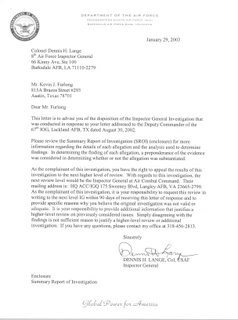
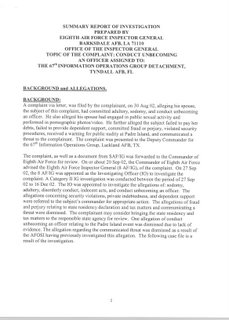
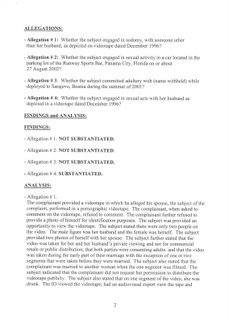
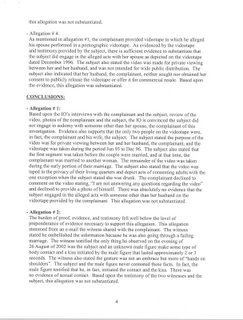
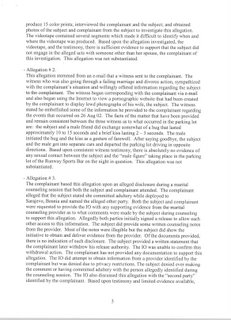
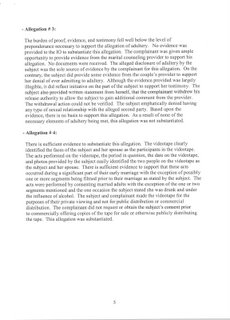
Not surprisingly, retired Major Furlong believes the IG inquiry was a whitewash. Such allegations are hardly new in military circles, but we can only judge by what the 8th Air Force IG found. However, it is clear that the IG process is not automatic topcover for flag officers. Over the past decade, several generals have been punished for misdeeds, including the former Judge Advocate General of the Air Force ( a two-star flag officer), who was demoted to Colonel after it was reveled that he had engaged in a string of extra-marital affairs.
Did the former Mrs. Furlong receive preferential treatment from the Air Force? That's the claim levied by her ex-husband and a group of Air Force NCOs who have reportedly sponsored various websites on her story. But so far, that claim cannot be confirmed, and (more importantly), the connections between this woman and General Hayden appear to be virtually non-existent. The 8AF/IG could find no substantiation for claims of an affair, even among the notes of a marriage counselor where (according to Mr. Furlong) his ex-wife admitted to the affair. The fact that the counselor released the notes is rather revealing, since such information is normally protected by confidentiality laws.
Our initial assessment of this one hasn't changed; it appears to be a bitter divorce that has wormed its way onto the internet and into fringe elements of the media, on the basis of an infidelity claim that cannot be independently verified. As it stands, we think that Major Furlong, Mr. Madsen and militarycorruption.com owe General Hayden an apology.
Additionally, it appears that Major Furlong may have his own bone to pick with the Air Force. According to information on the website, Furlong was disciplined for marrying his wife when she was a Second Lieutenant and he was a Major. I'm guessing that there may be more to the story than he's admitting. Furlong apparently met his future wife when he was an ROTC instructor at the University of Texas and she was a cadet; if their romantic involvement began during that period, then Furlong himself was guilty of an inappropriate relationship.
****
A tip of the hat to a couple of pros who aided in this inquiry. Bill (not his real name) is a former investigative reporter (and Pulitzer Prize nominee) who now works as a legal investigator, specializing in financial fraud and other white-collar crimes. Tom (also an alias) is a former military counter-intelligence officer with decades of investigative experience. Collectively, Bill and Tom did much of the legwork and helped us locate several key documents, including the IG report. A sincere thanks to Bill and Tom for their assistance. We owe you one.
Unfortunately, these rumors have actually been making the rounds for a while. Left-wing muckraker Wayne Madsen mentioned them in a column about problems at NSA in April, 2005. But Mr. Madsen, who claims he was assigned to the NSA during his Navy career, has some obvious credibility problems. In the same article, he charges that the operational hub of NSA was evacuated on 9-11, to help cover-up the "shootdown" of United Flight 93 by military jets. Never mind that there isn't a single shred of credible evidence to support that allegation. And never mind that the reported evacuation was in response to an inbound, hi-jacked plane (the same Flight 93), which was apparently heading for Washington, D.C., on another suicide mission.
Militarycorruption.com has also been trafficking the Hayden story for more than a year, based largely on the claims of the woman's ex-husband (retired Air Force Major Kevin Furlong), who provided information on his ex-spouse. Furlong and his wife had recently divorced and it was, by all accounts, a very bitter and acrimonious break-up that produced (among other things) an e-mail threat against Major Furlong and his creation of a website featuring sexually explicit photographs of his former wife. A judge later ordered Furlong to remove that material from the internet.
In our own inquiry into the Hayden allegations, we've had the opportunity to examine more records relating to this case, including an Air Force IG investigation of the matter, conducted more than three years ago. The IG inquiry was based on a complaint from Major Furlong against his ex-wife. Readers will note that the IG found substantiation for only one charge, and she lated accepted non-judicial punishment (an Article 32) at Tyndall AFB, FL, on a single count of sodomy. The "evidence" was based on the videotape that her ex-husband provided. Interestingly, Furlong originally claimed that the man in the video was someone else, but the IG concluded that it was, in fact, Major Furlong. After receiving the Article 32, Mrs. Furlong (then a Captain) left the active ranks, and began a career as a civilian intel analyst, while retaining her officer's commission in the Air Force Reserve. She is currently works for a national-level agency in the Washington, D.C. area, and has refused comment on these matters.
Here is the IG report, in its entireity. It's rather lengthy, but (to date) remains the definitive document in this case. You can also review the document here, but be advised: the link is to a website that is openly hostile to the former Mrs. Furlong. We cannot independently verify any of these allegations, and until proven otherwise, the IG report remains the official record of the Air Force investigation. In reviewing the report, readers will note several instances where Major Furlong refuses to provide requested information, or comment on material he did supply to the IG, including a pornographic videotape.
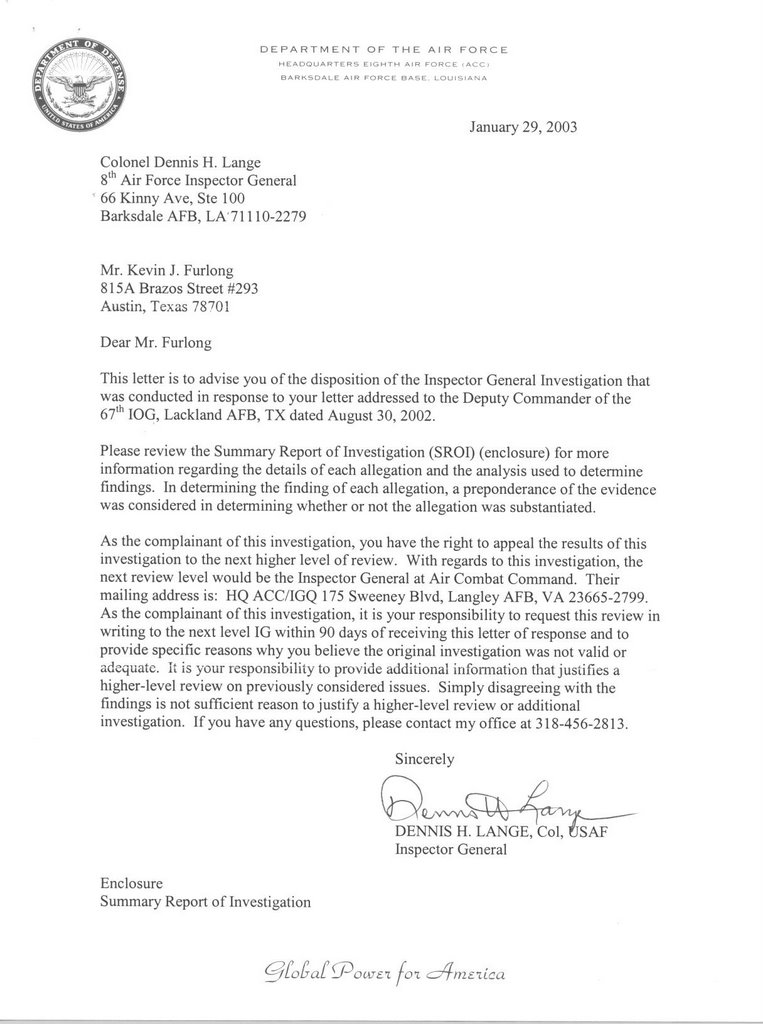


Not surprisingly, retired Major Furlong believes the IG inquiry was a whitewash. Such allegations are hardly new in military circles, but we can only judge by what the 8th Air Force IG found. However, it is clear that the IG process is not automatic topcover for flag officers. Over the past decade, several generals have been punished for misdeeds, including the former Judge Advocate General of the Air Force ( a two-star flag officer), who was demoted to Colonel after it was reveled that he had engaged in a string of extra-marital affairs.
Did the former Mrs. Furlong receive preferential treatment from the Air Force? That's the claim levied by her ex-husband and a group of Air Force NCOs who have reportedly sponsored various websites on her story. But so far, that claim cannot be confirmed, and (more importantly), the connections between this woman and General Hayden appear to be virtually non-existent. The 8AF/IG could find no substantiation for claims of an affair, even among the notes of a marriage counselor where (according to Mr. Furlong) his ex-wife admitted to the affair. The fact that the counselor released the notes is rather revealing, since such information is normally protected by confidentiality laws.
Our initial assessment of this one hasn't changed; it appears to be a bitter divorce that has wormed its way onto the internet and into fringe elements of the media, on the basis of an infidelity claim that cannot be independently verified. As it stands, we think that Major Furlong, Mr. Madsen and militarycorruption.com owe General Hayden an apology.
Additionally, it appears that Major Furlong may have his own bone to pick with the Air Force. According to information on the website, Furlong was disciplined for marrying his wife when she was a Second Lieutenant and he was a Major. I'm guessing that there may be more to the story than he's admitting. Furlong apparently met his future wife when he was an ROTC instructor at the University of Texas and she was a cadet; if their romantic involvement began during that period, then Furlong himself was guilty of an inappropriate relationship.
****
A tip of the hat to a couple of pros who aided in this inquiry. Bill (not his real name) is a former investigative reporter (and Pulitzer Prize nominee) who now works as a legal investigator, specializing in financial fraud and other white-collar crimes. Tom (also an alias) is a former military counter-intelligence officer with decades of investigative experience. Collectively, Bill and Tom did much of the legwork and helped us locate several key documents, including the IG report. A sincere thanks to Bill and Tom for their assistance. We owe you one.
Wednesday, May 10, 2006
Raking Through the Muck
Yesterday, we reported on salicious allegations involving General Michael Hayden, President Bush's nominee to be the next CIA Director. The information was reported on the website of an organization called militarycorruption.com. In reviewing their "evidence," we found it to be a case of "he said/she won't comment." The "he" in this case is retired Air Force Major Kevin Furlong, who says his ex-wife admitted to having affairs with General Hayden (and other men). Major Furlong's former wife has refused to comment on the matter. However, she did win a court case against her ex-husband, forcing him to remove sexually explicit pictures of her from the internet.
After our first posting on the subject, we received e-mails and links from a number of alert readers, directing us to cached copies of former websites devoted to "Captain amErika" (the term militarycorruption.com uses in referring to her, due to "legal" considerations.) The websites make a number of accusations against this woman; however, we were unable to open and review any of the "cached" attachments, so it is difficult, if not impossible, to verify any of these claims.
Additionally, the ties between this woman and General Hayden appear tenuous at best. The material we reviewed said they met in the Balkans in 2001, when Captain amErika was deployed there and Hayden (then director of NSA) paid a visit to SIGINT personnel and organizations in that region. We don't have details on General Hayden's trip (yet), but it sounds like one of those routine "see the troops" visits that senior officers make on a routine basis. These visits typically include multiple sites and briefings over a compressed schedule; under those circumstances, it seems highly unlikely that a three-star flag officer would commence an affair with someone he just met. Neither the former website (nor militarycorruption.com) have evidence of any subsequent contacts between this officer and General Hayden--other than the alleged comments to her former husband, hardly an impartial observer.
The former website also insinuates that General Hayden may have played a role in securing civilian employment for the individual, after she left her last Air Force assignment at Tyndall AFB, FL. We have confirmed that the individual in question is currently employed by a certain, three-letter intelligence agency which is headquartered at an Army post in Maryland. Our contacts even provided the individual's office phone numbers and e-mail addresses, which we will not publish. Additionally, we do not know the circumstances that led to her employment at the agency. However, as an experienced intelligence officer with the requisite security clearances, she certainly met the basic criteria for employment at the organization.
It is worth noting the civil service system is designed to prevent nepotism and cronyism in hiring, although the process is far from foolproof. Even agency directors have only limited influence in hiring personnel, particularly for entry and middle-level positions. These safeguards are designed to prevent episodes like one I witnessed in my own military career. At a large USAF intelligence organization, I watched the commander try to browbeat a civilian human resources manager into hiring a waitress from a local steakhouse as a GS-12 analyst. The waitress was extremely attractive, but she had no professional experience in the intel field, and no college degree. The HR manager rightly refused and stood her ground. The Colonel became so incensed that he suspended the HR manager for five days. She filed a grievance against the Colonel and won, and his career ended not long after that incident. Admittedly a three-star general has more influence than a mere O-6, but the same rules still apply. It's hard to imagine someone as sharp as Mike Hayden trying to circumvent the personnel process to hire an alleged paramour than he apparently hadn't seen in almost three years.
After our first review of the "Hayden file," we observed that the purported evidence was "as thin as orphanage gruel." Twenty-four hours later, our initial assessment hasn't changed. If the information in the website is correct--and that's a big "if"--then Capt amErika has issues that raise questions about her personal conduct, ethical standards and ability to hold a Top Secret security clearance. But the information linking her to the CIA nominee is paper thin, and the MSM would be well-advised to think long and hard before running with this one.
Regarding the folks who "broke" this story, my message remains unchange: put up or shut up. The available evidence tells only one side of the divorce case, that of an unhappy ex-husband. If you're serious about pursuing this story, publish court records and other public documents from the Furlong's divorce case, and make a FOIA request for relevant military records. Without that information, you've got a story that even the National Enquirer wouldn't touch, long on allegation, short on demonstrable facts.
And in fairness, you might want to point out that Major Furlong apparently met his ex-wife while serving as one of her college ROTC instructors. If that's the case--and if their relationship began at that point--then retired Major Furlong was potentially guilty of serious misconduct during his military career. Any sort of romantic involvement between superiors and subordinates remains illegal under the UCMJ, something that Major Furlong should have known. Sounds like someone else in this sordid affair may have a few skeletons in his closet, too.
Excuse me, while I head for the bathroom. After this exercise in sewage sifting, I definitely need a shower.
After our first posting on the subject, we received e-mails and links from a number of alert readers, directing us to cached copies of former websites devoted to "Captain amErika" (the term militarycorruption.com uses in referring to her, due to "legal" considerations.) The websites make a number of accusations against this woman; however, we were unable to open and review any of the "cached" attachments, so it is difficult, if not impossible, to verify any of these claims.
Additionally, the ties between this woman and General Hayden appear tenuous at best. The material we reviewed said they met in the Balkans in 2001, when Captain amErika was deployed there and Hayden (then director of NSA) paid a visit to SIGINT personnel and organizations in that region. We don't have details on General Hayden's trip (yet), but it sounds like one of those routine "see the troops" visits that senior officers make on a routine basis. These visits typically include multiple sites and briefings over a compressed schedule; under those circumstances, it seems highly unlikely that a three-star flag officer would commence an affair with someone he just met. Neither the former website (nor militarycorruption.com) have evidence of any subsequent contacts between this officer and General Hayden--other than the alleged comments to her former husband, hardly an impartial observer.
The former website also insinuates that General Hayden may have played a role in securing civilian employment for the individual, after she left her last Air Force assignment at Tyndall AFB, FL. We have confirmed that the individual in question is currently employed by a certain, three-letter intelligence agency which is headquartered at an Army post in Maryland. Our contacts even provided the individual's office phone numbers and e-mail addresses, which we will not publish. Additionally, we do not know the circumstances that led to her employment at the agency. However, as an experienced intelligence officer with the requisite security clearances, she certainly met the basic criteria for employment at the organization.
It is worth noting the civil service system is designed to prevent nepotism and cronyism in hiring, although the process is far from foolproof. Even agency directors have only limited influence in hiring personnel, particularly for entry and middle-level positions. These safeguards are designed to prevent episodes like one I witnessed in my own military career. At a large USAF intelligence organization, I watched the commander try to browbeat a civilian human resources manager into hiring a waitress from a local steakhouse as a GS-12 analyst. The waitress was extremely attractive, but she had no professional experience in the intel field, and no college degree. The HR manager rightly refused and stood her ground. The Colonel became so incensed that he suspended the HR manager for five days. She filed a grievance against the Colonel and won, and his career ended not long after that incident. Admittedly a three-star general has more influence than a mere O-6, but the same rules still apply. It's hard to imagine someone as sharp as Mike Hayden trying to circumvent the personnel process to hire an alleged paramour than he apparently hadn't seen in almost three years.
After our first review of the "Hayden file," we observed that the purported evidence was "as thin as orphanage gruel." Twenty-four hours later, our initial assessment hasn't changed. If the information in the website is correct--and that's a big "if"--then Capt amErika has issues that raise questions about her personal conduct, ethical standards and ability to hold a Top Secret security clearance. But the information linking her to the CIA nominee is paper thin, and the MSM would be well-advised to think long and hard before running with this one.
Regarding the folks who "broke" this story, my message remains unchange: put up or shut up. The available evidence tells only one side of the divorce case, that of an unhappy ex-husband. If you're serious about pursuing this story, publish court records and other public documents from the Furlong's divorce case, and make a FOIA request for relevant military records. Without that information, you've got a story that even the National Enquirer wouldn't touch, long on allegation, short on demonstrable facts.
And in fairness, you might want to point out that Major Furlong apparently met his ex-wife while serving as one of her college ROTC instructors. If that's the case--and if their relationship began at that point--then retired Major Furlong was potentially guilty of serious misconduct during his military career. Any sort of romantic involvement between superiors and subordinates remains illegal under the UCMJ, something that Major Furlong should have known. Sounds like someone else in this sordid affair may have a few skeletons in his closet, too.
Excuse me, while I head for the bathroom. After this exercise in sewage sifting, I definitely need a shower.
Tuesday, May 09, 2006
The Slime-ing of General Hayden
It was probably inevitable, given today's "gotcha" media/political environment, and the CIA's own resistance to change. This story will probably enter the news cycle in the coming hours, and become part of a campaign to "slime" General Mike Hayden, the president's nominee to take over that troubled spy agency. At first glance, the charge that General Hayden might have had an extra-maritial affair seems shaky, the evidence as thin as orphanage gruel. But the lack of demonstrable facts hasn't stopped the political class and the MSM in the past. We'll see what happens this time.
The accusation against General Hayden is being reported by an organization called militarycorruption.com, run by several ex-military and media types. The organization prides itself on "fighting for the truth...exposing the corrupt." Judging from their website, the organization seems to spend a lot of time on sex-related cases, and allegations of misconduct by senior officers and other high-ranking officials. Some of their cases are well known, such as the former Air Force Judge Advocate General, demoted and forced into retirement for a string of affairs during his military career. Other investigations by the website are obscure, and have received little attention--even in military circles.
But the Hayden accusation is bound to be a block-buster. According to the organization's website, General Hayden "might" have had an extra-marital affair with with a then-married, female NSA officer which militarycorruption.com identifies as "Captain Amerika." No timeline is given for the affair, and the website refuses to name her for "legal reasons." The accuser in this case is the woman's ex-husband, identified as "former" Air Force Major Kevin Furlong. Major Furlong told the organization that his ex-wife admitted having affairs with Hayden and other men. In return, Furlong reportedly posted nude pictures of his ex-wife on the internet, until a judge ordered him to remove them. There's obviously no love lost between Furlong and his ex-wife, who was never accused of misconduct, and later promoted to major.
Militarycorruption.com won't provide any details on Furlong's military career (describing him as "former" rather than "retired' suggests he left the Air Force before serving 20 years--it would be interesting to know why he left early, and under what circumstances). Additionally, the organization will not disclose his current location, other than to say he lives in Texas. Sorry, but when you level that sort of charge against a presidential nominee, you give up some measure of your right to privacy. Additionally, the website has no copies of the Furlongs' divorce filings (which should be public record), documents that are central to this accusation. And, of course, the former Mrs. Furlong is only identified by the moniker "Captain Amerika" because of "legal reasons" (read: threatened lawsuit).
In other words, what we have are an accusation of an obviously disgruntled ex-husband, with no proof to support his allegations other than "his word." By even internet standards, that's extraordinarily skimpy "evidence" (and I use that term advisedly). But that hasn't stopped the folks at militarycorruption.com from running with the story. And, given the opposition marshalling against General Hayden, the accusation may well gain traction in the coming days, providing a potential mechanism for derailing the nomination.
For the record, I don't know General Hayden and never worked for him. My only knowledge of the man and his conduct comes from indivduals who have worked with him and for him over the past three decades. Without fail, they describe him as an exceptional leader with impeccable character. There's also the little matter of his "vetting" for the NSA and DDNI posts. While no background check is completely fool-proof, it is doubtful that Hayden would have been nominated as Negroponte's deputy if there was any evidence of past misconduct. Ditto for his selection for the CIA post.
My message to militarycorruption.com is simple: put up or shut up. You've floated a scandalous accusation against one of the nation's top intelligence officials--a charge that could potentially end his career. Offer more substantial proof, or drop the story and apologize to General Hayden. Publish copies of the Furlongs' divorce filings and other relevant, public documents. Tell us more about Major Furlong, and under what circumstances he left the Air Force. Tell us about the legal actions that forced him to remove those nude photos of his wife from the internet, and what impact--if any--it had on his military career. And, most importantly, make Furlong available for interviews with other bloggers and journalists.
As it stands, this "story" stinks to high heaven--salicious charges, but little in the way of hard evidence to back them up. But most media types never let the "facts" get in the way of advancing their agenda, and I'm sure they'd welcome the opportunity to "slime" General Hayden. I'm willing to bet $100 that both the NYT and WaPo have reporters on their way to Texas, in search of the mysterious Major Furlong.
***UPDATE***
1232 PDT
In a 2004 posting at militarycorruption.com about this alleged affair, Furlong is identified as a "retired" major, indicating that he served long enough to qualify for a pension. However, there are still lots of questions behind his allegations--questions that deserve answers.
The accusation against General Hayden is being reported by an organization called militarycorruption.com, run by several ex-military and media types. The organization prides itself on "fighting for the truth...exposing the corrupt." Judging from their website, the organization seems to spend a lot of time on sex-related cases, and allegations of misconduct by senior officers and other high-ranking officials. Some of their cases are well known, such as the former Air Force Judge Advocate General, demoted and forced into retirement for a string of affairs during his military career. Other investigations by the website are obscure, and have received little attention--even in military circles.
But the Hayden accusation is bound to be a block-buster. According to the organization's website, General Hayden "might" have had an extra-marital affair with with a then-married, female NSA officer which militarycorruption.com identifies as "Captain Amerika." No timeline is given for the affair, and the website refuses to name her for "legal reasons." The accuser in this case is the woman's ex-husband, identified as "former" Air Force Major Kevin Furlong. Major Furlong told the organization that his ex-wife admitted having affairs with Hayden and other men. In return, Furlong reportedly posted nude pictures of his ex-wife on the internet, until a judge ordered him to remove them. There's obviously no love lost between Furlong and his ex-wife, who was never accused of misconduct, and later promoted to major.
Militarycorruption.com won't provide any details on Furlong's military career (describing him as "former" rather than "retired' suggests he left the Air Force before serving 20 years--it would be interesting to know why he left early, and under what circumstances). Additionally, the organization will not disclose his current location, other than to say he lives in Texas. Sorry, but when you level that sort of charge against a presidential nominee, you give up some measure of your right to privacy. Additionally, the website has no copies of the Furlongs' divorce filings (which should be public record), documents that are central to this accusation. And, of course, the former Mrs. Furlong is only identified by the moniker "Captain Amerika" because of "legal reasons" (read: threatened lawsuit).
In other words, what we have are an accusation of an obviously disgruntled ex-husband, with no proof to support his allegations other than "his word." By even internet standards, that's extraordinarily skimpy "evidence" (and I use that term advisedly). But that hasn't stopped the folks at militarycorruption.com from running with the story. And, given the opposition marshalling against General Hayden, the accusation may well gain traction in the coming days, providing a potential mechanism for derailing the nomination.
For the record, I don't know General Hayden and never worked for him. My only knowledge of the man and his conduct comes from indivduals who have worked with him and for him over the past three decades. Without fail, they describe him as an exceptional leader with impeccable character. There's also the little matter of his "vetting" for the NSA and DDNI posts. While no background check is completely fool-proof, it is doubtful that Hayden would have been nominated as Negroponte's deputy if there was any evidence of past misconduct. Ditto for his selection for the CIA post.
My message to militarycorruption.com is simple: put up or shut up. You've floated a scandalous accusation against one of the nation's top intelligence officials--a charge that could potentially end his career. Offer more substantial proof, or drop the story and apologize to General Hayden. Publish copies of the Furlongs' divorce filings and other relevant, public documents. Tell us more about Major Furlong, and under what circumstances he left the Air Force. Tell us about the legal actions that forced him to remove those nude photos of his wife from the internet, and what impact--if any--it had on his military career. And, most importantly, make Furlong available for interviews with other bloggers and journalists.
As it stands, this "story" stinks to high heaven--salicious charges, but little in the way of hard evidence to back them up. But most media types never let the "facts" get in the way of advancing their agenda, and I'm sure they'd welcome the opportunity to "slime" General Hayden. I'm willing to bet $100 that both the NYT and WaPo have reporters on their way to Texas, in search of the mysterious Major Furlong.
***UPDATE***
1232 PDT
In a 2004 posting at militarycorruption.com about this alleged affair, Furlong is identified as a "retired" major, indicating that he served long enough to qualify for a pension. However, there are still lots of questions behind his allegations--questions that deserve answers.
Attack of the Flying Robts
AFP has an interesting, unsigned piece on an emerging terrorist threat: radio-controlled aircraft and small unmanned aerial vehicles (UAVs). They are readily available, relatively easy to build and operate, and extremely difficult to detect. In the hands of a terrorist organization, these "flying robots" could be used to deliver a small explosive device--or a chemical or biological payload--against "soft" targets.
As the article notes, some terrorists are already exploring this technology. Hizballah has obtained a small fleet of UAVs from Iran, and flew one over norther Israel on 11 April 2005. A videotape of the flight reportedly aired on a Hizballah TV station in Lebanon, and Israeli defense sources have reportedly confirmed a second flight as well. In both cases, the Israeli Air Force (IAF) was unaware of the intrusion until the UAV was well inside Israel's airspace, and had been sighted by ground observers. These flight(s) represented a major psychological and propaganda for Hizballah, which (until now) had no effective means of challenging the IAF's control of the Israeli skies.
With their small size (a wing span of five meters or less), use of lightweight materials, slow operating speeds and the ability to operate at low altitude, these remotely-piloted aircraft are almost impossible to detect on radar. Most of these devices have a radar cross-section that is miniscule; additionally, the "velocity gate" feature of most surveillance and target-tracking radars automatically eliminate targets operating at slow speeds, so a terrorist UAV, hang-glider or hobby aircraft would never appear on the screen--even if the radar managed to detect it.
These potential threats cover the spectrum from over-sized, radio-controlled model planes and helicopters, to hang-gliders and ultra-lights and small UAVs. Radio-controlled aircraft are inexpensive, and can be obtained on-line, or from a local hobby shop. Hang-gliders and ultra-lights are also readily available, mostly in kit forms that can be quickly assembled. UAVs are more expensive, but still within reach for a terrorist organization. And with scores of UAV manufacturers around the world (and no proliferation controls), terrorists are limited only by their financial resources and technical accumen. But even those restrictions can be easily overcome, as evidenced by Iran's transfer of UAVs to Hizballah, and the widespread use of GPS technology. GPS allows a terrorist ultralight, hang glider or UAV to navigate precisely, and reach pre-determine targets--without the use of complex data link signals that could be potentially jammed.
These types of aircraft have two limitations: a small payload, and in most cases, a relatively short range. However, these deficiencies are less important in a chemical or biological attack, where a small amount of agent, delivered to the right target by by remoted controlled ultralight or UAV, could have devastating results. The same holds true for a small, air-delivered explosive warhead, employed against such targets as oil refineries, POL storage, or power plants.
At least one expert claims that little attention has been paid to this threat. That's not entirely true. I know at least one Air Force organization that recently completed a major assessment of this threat, and the information has been presented to several high-level audiences. As for mitigation efforts, that's another story. In deployment situations, our military forces have the resources to deal with terrorist ultra-lights and UAVs (shoulder-fired SAMs, attack aircraft, helicopters), but linking them together in a viable defensive scheme remains problematic. In a homeland defense scenario, the problems are more acute, and deserve serious consideration. The potential threat from this type of technology will only grow in the years to come.
A slightly scary footnote: the article references a New Zealand engineer, Bruce Simpson, who has demonstrated how terrorists could build a crude--but effective--cruise missile for under $5,000, using off-the-shelf technology. Simpson's website recounts those efforts--and pressure from the U.S. and New Zealand governments to shut down the project.
As the article notes, some terrorists are already exploring this technology. Hizballah has obtained a small fleet of UAVs from Iran, and flew one over norther Israel on 11 April 2005. A videotape of the flight reportedly aired on a Hizballah TV station in Lebanon, and Israeli defense sources have reportedly confirmed a second flight as well. In both cases, the Israeli Air Force (IAF) was unaware of the intrusion until the UAV was well inside Israel's airspace, and had been sighted by ground observers. These flight(s) represented a major psychological and propaganda for Hizballah, which (until now) had no effective means of challenging the IAF's control of the Israeli skies.
With their small size (a wing span of five meters or less), use of lightweight materials, slow operating speeds and the ability to operate at low altitude, these remotely-piloted aircraft are almost impossible to detect on radar. Most of these devices have a radar cross-section that is miniscule; additionally, the "velocity gate" feature of most surveillance and target-tracking radars automatically eliminate targets operating at slow speeds, so a terrorist UAV, hang-glider or hobby aircraft would never appear on the screen--even if the radar managed to detect it.
These potential threats cover the spectrum from over-sized, radio-controlled model planes and helicopters, to hang-gliders and ultra-lights and small UAVs. Radio-controlled aircraft are inexpensive, and can be obtained on-line, or from a local hobby shop. Hang-gliders and ultra-lights are also readily available, mostly in kit forms that can be quickly assembled. UAVs are more expensive, but still within reach for a terrorist organization. And with scores of UAV manufacturers around the world (and no proliferation controls), terrorists are limited only by their financial resources and technical accumen. But even those restrictions can be easily overcome, as evidenced by Iran's transfer of UAVs to Hizballah, and the widespread use of GPS technology. GPS allows a terrorist ultralight, hang glider or UAV to navigate precisely, and reach pre-determine targets--without the use of complex data link signals that could be potentially jammed.
These types of aircraft have two limitations: a small payload, and in most cases, a relatively short range. However, these deficiencies are less important in a chemical or biological attack, where a small amount of agent, delivered to the right target by by remoted controlled ultralight or UAV, could have devastating results. The same holds true for a small, air-delivered explosive warhead, employed against such targets as oil refineries, POL storage, or power plants.
At least one expert claims that little attention has been paid to this threat. That's not entirely true. I know at least one Air Force organization that recently completed a major assessment of this threat, and the information has been presented to several high-level audiences. As for mitigation efforts, that's another story. In deployment situations, our military forces have the resources to deal with terrorist ultra-lights and UAVs (shoulder-fired SAMs, attack aircraft, helicopters), but linking them together in a viable defensive scheme remains problematic. In a homeland defense scenario, the problems are more acute, and deserve serious consideration. The potential threat from this type of technology will only grow in the years to come.
A slightly scary footnote: the article references a New Zealand engineer, Bruce Simpson, who has demonstrated how terrorists could build a crude--but effective--cruise missile for under $5,000, using off-the-shelf technology. Simpson's website recounts those efforts--and pressure from the U.S. and New Zealand governments to shut down the project.
Monday, May 08, 2006
Mikey Weinstein's Crusade
Air Force Major General Jack Catton is in a bit of hot water. The service has launched an inquiry over an appeal that General Catton sent from his official e-mail account, urging fellow Air Force Academy classmates to contribute to the Congressional campaign of another academy graduate.
Catton currently serves as Director of Requirements at Air Combat Command Headquarters, located at Langley AFB, Virginia. He sent the fund-raising e-mail last Thursday to about 200 former classmates, many of whom are still on active duty. Federal laws--most notably, the Hatch Act--prohibit federal employees from using their position to solicit campaign contributions, or votes for a particular candidate. Military regulations contain similar prohibitions. An Air Force spokesman told the Washington Post that "appropriate officials are inquiring into the facts surrounding these e-mails."
In his e-mail, General Catton urged his classmates to support Bentley Rayburn, a retired Air Force general now running for Congress from the Colorado Springs area. Rayburn is seeking to replace retiring Colorado Republican Joel Hefley, who has represented the district for the past 20 years. Hefley's district includes the Air Force Academy, two Air Force bases and thousands of active duty and retired personnel. Catton told fellow academy grads that "we are certainly in need of Christian men with integrity and military experience in Congress."
The Post obtained its copy of Catton's e-mail from another Air Force Academy graduate, Mike L. "Mikey" Weinstein of Albuquerque, New Mexico. If the name sounds familiar, it should be. Weinstein, an attorney and businessmen, has been in the news over the past couple of years, who is suing the Air Force over what he contends is extensive proselytizing by evangelical Christians. Weinstein contends that his sons have endured anti-Semitic remarks and discrimination while attending the Air Force Academy. One of Weinstein's sons graduated last May; the other is still a member of the cadet corps.
Predictably, Weinstein's crusade has made him something of a folk hero among the seperation of church and state crowd, the liberal left, and other assorted secularists. He's even found a second career as a professional speaker, offering his thoughts on the "Showdown in Colorado Springs," and "The Fight to Keep Church and State Separate."
We've written extensively about Weinstein's campaign, which have helped formulate an overblown religious "crisis" at the Academy, and created an unwelcome diversion away from the institution's primary mission, training future Air Force officers. Thanks (in part) to Weinstein's efforts, the academy has imposed faith sensitivity training for all assigned personnel, military and civilian. The academy also turned to the Yale Divinity School--no friend of conservative Christians--for an assessment of its religious "atmosphere" and ways to improve tolerance. Not surprisingly, the Yale team sided with Mikey Weinstein.
Make no mistake: the Air Force (and the academy) should never tolerate religious bigotry or discrimination. And there are effective ways of dealing with anti-Semitic slurs and proselytizing--including the cadet honor code and the Uniform Code of Military Justice (UCMJ). But those techniques won't satisfy critics like Mr. Weinstein, his friends in the MSM, or at groups like Americans United for Separation of Church and State. Ironically, this campaign to ensure religious freedom at the academy has actually produced a backlash against evangelicals--on a campus where 90% of the cadets identify themselves as Christians.
But the fallout from Weinstein's crusade has produced than sensitivity sessions. At least one officer, Brigadier General Johnny Weida, the former academy Commandant of Cadets, has seen his career derailed because of the "scandal." Weida's transgressions? Failing to rein in those pesky evangelicals (who papered the cadet dining hall with flyers for a screening of The Passion of the Christ), and delivering an address to the cadets in which General Weida said an officer's first responsibility is to his "god." Note the small "g." Weida, a self-described, born-again Christian, never told cadets to pray in the name of Jesus, Mohammed, Budda or anyone else. But that was enough to incur the wrath of Weinstein and his fellow activists. Weida left the academy last summer, his name was removed from the promotion list for Major General, and he's now in a relatively back-water position at Wright-Patterson AFB, in Ohio.
Now, Major General Catton is in the cross-hairs. Admittedly, Catton did a very dumb thing, and he probably deserves an administrative slap on the wrist. But if recent history is any indicator, Weinstein and his crusaders won't be satisfied until Catton is removed from his position, and his career is effectively ended. So much for tolerance.
****
There's one more angle to this story that merits further inquiry, IMO. General Rayburn is a 1975 graduate of the Air Force Academy; Catton graduated in 1976, Weinstein in 1977, and General Weida received his degree and commission in 1978. In other words, all four were in the cadet wing at the same time. Obviously, the wing is a large organization, typically, more than 2,000 cadets, scatterd across multiple squadrons and groups. As at a civilian university, it is quite possible to spend four years at military academy and be unfamiliar with scores of classmates.
But the wing is also a surprisingly intimate environment, where reputations are made, friendships established, and rivalries formed umder tense, demanding conditions. It would be interesting to know what relationships--if any--existed between Rayburn, Catton, Weinstein and Weida during their days in Colorado Springs. As earlier graduates, Rayburn and Catton would have been in a position to help supervise the Weinstein's Basic Cadet Training, the grueling summer orientation program for new arrivals. Did a grudge from more than three decades ago, play a role in Weinstein's crusade against the academy, and his former classmates?
Catton currently serves as Director of Requirements at Air Combat Command Headquarters, located at Langley AFB, Virginia. He sent the fund-raising e-mail last Thursday to about 200 former classmates, many of whom are still on active duty. Federal laws--most notably, the Hatch Act--prohibit federal employees from using their position to solicit campaign contributions, or votes for a particular candidate. Military regulations contain similar prohibitions. An Air Force spokesman told the Washington Post that "appropriate officials are inquiring into the facts surrounding these e-mails."
In his e-mail, General Catton urged his classmates to support Bentley Rayburn, a retired Air Force general now running for Congress from the Colorado Springs area. Rayburn is seeking to replace retiring Colorado Republican Joel Hefley, who has represented the district for the past 20 years. Hefley's district includes the Air Force Academy, two Air Force bases and thousands of active duty and retired personnel. Catton told fellow academy grads that "we are certainly in need of Christian men with integrity and military experience in Congress."
The Post obtained its copy of Catton's e-mail from another Air Force Academy graduate, Mike L. "Mikey" Weinstein of Albuquerque, New Mexico. If the name sounds familiar, it should be. Weinstein, an attorney and businessmen, has been in the news over the past couple of years, who is suing the Air Force over what he contends is extensive proselytizing by evangelical Christians. Weinstein contends that his sons have endured anti-Semitic remarks and discrimination while attending the Air Force Academy. One of Weinstein's sons graduated last May; the other is still a member of the cadet corps.
Predictably, Weinstein's crusade has made him something of a folk hero among the seperation of church and state crowd, the liberal left, and other assorted secularists. He's even found a second career as a professional speaker, offering his thoughts on the "Showdown in Colorado Springs," and "The Fight to Keep Church and State Separate."
We've written extensively about Weinstein's campaign, which have helped formulate an overblown religious "crisis" at the Academy, and created an unwelcome diversion away from the institution's primary mission, training future Air Force officers. Thanks (in part) to Weinstein's efforts, the academy has imposed faith sensitivity training for all assigned personnel, military and civilian. The academy also turned to the Yale Divinity School--no friend of conservative Christians--for an assessment of its religious "atmosphere" and ways to improve tolerance. Not surprisingly, the Yale team sided with Mikey Weinstein.
Make no mistake: the Air Force (and the academy) should never tolerate religious bigotry or discrimination. And there are effective ways of dealing with anti-Semitic slurs and proselytizing--including the cadet honor code and the Uniform Code of Military Justice (UCMJ). But those techniques won't satisfy critics like Mr. Weinstein, his friends in the MSM, or at groups like Americans United for Separation of Church and State. Ironically, this campaign to ensure religious freedom at the academy has actually produced a backlash against evangelicals--on a campus where 90% of the cadets identify themselves as Christians.
But the fallout from Weinstein's crusade has produced than sensitivity sessions. At least one officer, Brigadier General Johnny Weida, the former academy Commandant of Cadets, has seen his career derailed because of the "scandal." Weida's transgressions? Failing to rein in those pesky evangelicals (who papered the cadet dining hall with flyers for a screening of The Passion of the Christ), and delivering an address to the cadets in which General Weida said an officer's first responsibility is to his "god." Note the small "g." Weida, a self-described, born-again Christian, never told cadets to pray in the name of Jesus, Mohammed, Budda or anyone else. But that was enough to incur the wrath of Weinstein and his fellow activists. Weida left the academy last summer, his name was removed from the promotion list for Major General, and he's now in a relatively back-water position at Wright-Patterson AFB, in Ohio.
Now, Major General Catton is in the cross-hairs. Admittedly, Catton did a very dumb thing, and he probably deserves an administrative slap on the wrist. But if recent history is any indicator, Weinstein and his crusaders won't be satisfied until Catton is removed from his position, and his career is effectively ended. So much for tolerance.
****
There's one more angle to this story that merits further inquiry, IMO. General Rayburn is a 1975 graduate of the Air Force Academy; Catton graduated in 1976, Weinstein in 1977, and General Weida received his degree and commission in 1978. In other words, all four were in the cadet wing at the same time. Obviously, the wing is a large organization, typically, more than 2,000 cadets, scatterd across multiple squadrons and groups. As at a civilian university, it is quite possible to spend four years at military academy and be unfamiliar with scores of classmates.
But the wing is also a surprisingly intimate environment, where reputations are made, friendships established, and rivalries formed umder tense, demanding conditions. It would be interesting to know what relationships--if any--existed between Rayburn, Catton, Weinstein and Weida during their days in Colorado Springs. As earlier graduates, Rayburn and Catton would have been in a position to help supervise the Weinstein's Basic Cadet Training, the grueling summer orientation program for new arrivals. Did a grudge from more than three decades ago, play a role in Weinstein's crusade against the academy, and his former classmates?
Roberts Redux?
For most of the day, we've heard various members of Congress and the drive-by media express "concern" about General Mike Hayden's nomination to be the next CIA Director. Just a few hours ago, Senator John Kerry (you may recall, he served in Vietnam) told a firefighters' convention that he had "serious reservations" about Hayden's selection because "he is one of the main supporters of Donald Rumsfeld who helped put in place the programs of spying on Americans and has been one of the biggest defenders of it." Not exactly a pithy soundbite, but you've got to give Kerry credit for capturing all of the DNC talking points in a single sentence.
Other senators (chief among them, Pennsylvania's Arlen Spector) promised to use the confirmation hearings to ask "tough questions" about the NSA's controversial "domestic" surveillance program. You'll note the quotation marks around the word domestic, because, as another retired spook reminded me, the term does not accurately describe the NSA effort. As General Hayden explained back in January, the program covers communications between suspected terrorists or facilitators in the United States and their counterparts overseas.
You might also recall that Mr. Spector and his co-horts were prepared to ask those questions a few months ago, when the Senate had an opportunity to hold hearings on the matter. But something happened along the way. The Senate decided to take a pass on hearings, for reasons that were never quite clear. The truth is, Senate critics quickly discovered they didn't have a leg to stand on, particulary after it was disclosed that General Hayden (who was NSA Director at the time) had briefed key members of Congress from the start. The Senators also discovered ample evidence that the NSA program was run in full compliance with the law, and more importantly, it was yielding valuable information on terrorist activties.
If this kind of talk from Capitol Hill sounds vaguely familiar, it should be. Not too many months ago, Senators were vowing to grill Supreme Court nominee John Roberts on abortion and other high-profile issues. But that inquisition never quite materialized, either. In his confirmation hearings, Justice Robert dazzled everyone, demonstrating legal depth and understanding that was far beyond that, of say, Joe Biden, Ted Kennedy or the Senate stafferes that furnished their questions. The Roberts confirmation hearings never quite became a love-fest, but as the nominee kept knocking their "hard" queries out of the park, the senators decided to cut their losses, and given Roberts an up-or-down vote.
The Hayden hearings may prove to be a similar tour-de-force for the nominee. Mike Hayden isn't as telegenic as John Roberts, but when it comes to intelligence matters, no one is more knowledgable, or experienced. General Hayden has served his country as an intelligence officer for more than 40 years, in positions ranging from analyst to agency director. He will enter the hearing room loaded for bear, with a formidable grasp of intel issues that no Senator or staffer can match. And, as he demonstrated in January, General Hayden is capable of defending controversial intelligence programs with compelling facts and logic. His powerful arguments in favor of the surveillance effort are one reason why the Senate took a pass on those promised hearings a few months ago.
Any Senator wishing to go toe-to-toe with Mike Hayden on matters of intelligence management, analysis, operations or doctrine does so at his own public peril. In boxing terms, the Roberts cpmfor,atopm was a first-round knock-out, and General Hayden can deliver the same type of performance when he enters the hearing room.
****
From the "grasping at straws" department, USA Today weighed in with this howler on supposed "holes" in Hayden's resume. According to the experts at the paper, Hayden may have trouble winning confirmation because of (a) his lack of experience in HUMINT matters and (b) a lack of assignments in the Middle East. While we've noted in the past that General Hayden has never been a HUMINT officer, that does not disqualify him for the CIA job. As a career intelligence officer (with more than 35 years of experience), Hayden has led organizations with HUMINT departments, most notably the intelligence directorate (J-2) at U.S. European Command.
Additionally, most critics overlook Hayden's tour at the U.S. Embassy in Bulgaria, where he served as a defense attache. One of the primary missions of any attache is--guess what--gathering information, so the idea that Hayden lacks HUMINT skills is ludicrous. Besides, the President nominated General Hayden to run the CIA, not agent networks in the field. Hayden has more than enough experience in HUMINT to and find the right people to run the agency's field operations, and revitalize that directorate within the agency.
His supposed "lack of experience in the Middle East" is another non-starter. As DIRNSA (Director of NSA) he received daily updates on intelligence in that region, and he's made more than a few trips to that region. The NSA's recent success against terrorists are a reflection of a director who understood that threat, and empowered his people to get the job done. He can do the same thing at Langley, despite these gaping "holes" in his resume.
Other senators (chief among them, Pennsylvania's Arlen Spector) promised to use the confirmation hearings to ask "tough questions" about the NSA's controversial "domestic" surveillance program. You'll note the quotation marks around the word domestic, because, as another retired spook reminded me, the term does not accurately describe the NSA effort. As General Hayden explained back in January, the program covers communications between suspected terrorists or facilitators in the United States and their counterparts overseas.
You might also recall that Mr. Spector and his co-horts were prepared to ask those questions a few months ago, when the Senate had an opportunity to hold hearings on the matter. But something happened along the way. The Senate decided to take a pass on hearings, for reasons that were never quite clear. The truth is, Senate critics quickly discovered they didn't have a leg to stand on, particulary after it was disclosed that General Hayden (who was NSA Director at the time) had briefed key members of Congress from the start. The Senators also discovered ample evidence that the NSA program was run in full compliance with the law, and more importantly, it was yielding valuable information on terrorist activties.
If this kind of talk from Capitol Hill sounds vaguely familiar, it should be. Not too many months ago, Senators were vowing to grill Supreme Court nominee John Roberts on abortion and other high-profile issues. But that inquisition never quite materialized, either. In his confirmation hearings, Justice Robert dazzled everyone, demonstrating legal depth and understanding that was far beyond that, of say, Joe Biden, Ted Kennedy or the Senate stafferes that furnished their questions. The Roberts confirmation hearings never quite became a love-fest, but as the nominee kept knocking their "hard" queries out of the park, the senators decided to cut their losses, and given Roberts an up-or-down vote.
The Hayden hearings may prove to be a similar tour-de-force for the nominee. Mike Hayden isn't as telegenic as John Roberts, but when it comes to intelligence matters, no one is more knowledgable, or experienced. General Hayden has served his country as an intelligence officer for more than 40 years, in positions ranging from analyst to agency director. He will enter the hearing room loaded for bear, with a formidable grasp of intel issues that no Senator or staffer can match. And, as he demonstrated in January, General Hayden is capable of defending controversial intelligence programs with compelling facts and logic. His powerful arguments in favor of the surveillance effort are one reason why the Senate took a pass on those promised hearings a few months ago.
Any Senator wishing to go toe-to-toe with Mike Hayden on matters of intelligence management, analysis, operations or doctrine does so at his own public peril. In boxing terms, the Roberts cpmfor,atopm was a first-round knock-out, and General Hayden can deliver the same type of performance when he enters the hearing room.
****
From the "grasping at straws" department, USA Today weighed in with this howler on supposed "holes" in Hayden's resume. According to the experts at the paper, Hayden may have trouble winning confirmation because of (a) his lack of experience in HUMINT matters and (b) a lack of assignments in the Middle East. While we've noted in the past that General Hayden has never been a HUMINT officer, that does not disqualify him for the CIA job. As a career intelligence officer (with more than 35 years of experience), Hayden has led organizations with HUMINT departments, most notably the intelligence directorate (J-2) at U.S. European Command.
Additionally, most critics overlook Hayden's tour at the U.S. Embassy in Bulgaria, where he served as a defense attache. One of the primary missions of any attache is--guess what--gathering information, so the idea that Hayden lacks HUMINT skills is ludicrous. Besides, the President nominated General Hayden to run the CIA, not agent networks in the field. Hayden has more than enough experience in HUMINT to and find the right people to run the agency's field operations, and revitalize that directorate within the agency.
His supposed "lack of experience in the Middle East" is another non-starter. As DIRNSA (Director of NSA) he received daily updates on intelligence in that region, and he's made more than a few trips to that region. The NSA's recent success against terrorists are a reflection of a director who understood that threat, and empowered his people to get the job done. He can do the same thing at Langley, despite these gaping "holes" in his resume.
Let the Confirmation Battle Begin
To absolutely no one's surprise (but some Congressional disappointment), President Bush today nominated Air Force General Mike Hayden to be the next Director of the CIA.
"Mike Hayden is supremely qualified for this position," said Mr. Bush in making the announcement. "He knows intelligence community from the ground up...he has been both a producer and consumer of intelligence." Hayden, the nation's highest-ranking military intelligence officer, appeared with President Bush in the Oval Office, where the nomination was announced.
We agree with the President. Hayden is a superb choice, an exceptionally effective intelligence leader who--if confirmed--can continue needed reforms at the CIA.
Unfortunately, Hayden's confirmation hearings may prove contentious. The general's role in the NSA domestic surveillance program (when he ran the National Security Agency) has some senators up in arms (paging Arlen Specter). Others are "concerned" about Hayden's status as an active duty military officer, fearing that it will give the military "too much control" over the nation's intelligence community.
As we pointed out yesterday, such "concerns" are basically a red herring. The Pentagon has long controlled the bulk of the nation's intelligence budget; afterall, they provide most of our collection assets. Additionally, there is a long history of military officers leading intelligence agencies; both the NSA director's job and the Director of the Defense Intelligence Agency are, by law, military positions. And, in the early days of the CIA, the agency's first three directors were uniformed officers. Even the CIA's current deputy director is a Navy admiral, though that will apparently become a civilian billet, with Hayden coming onboard.
If American is serious about reforming the CIA, then General Hayden should have confirmation hearings that focus on genuine intelligence issues, not ill-founded concerns about what uniform he wears to the office. At this juncture in the War on Terror, General Hayden (and the agency) deserve a speedy confirmation process, and a quick up-or-down vote. Hayden is hardly an unknown commodity on Capitol Hill and in the intelligence community; his outstanding record speaks for itself.
This is not, as some of the chattering class suggest, "another Harriet Miers." Hayden is the right man for the job, at the right time. If he somehow fails to win confirmation, it will only underscore my long-standing fears about Congress: when it comes to the serious busienss of intelligence reform, our representatives and Senators aren't up to the task.
Addendum: Journalist James Bamford, who has written two best-selling books about the NSA and has interviewed Hayden extensively, believes the general's chances of confirmation "have dropped below" 50%. I sincerely hope he's wrong.
"Mike Hayden is supremely qualified for this position," said Mr. Bush in making the announcement. "He knows intelligence community from the ground up...he has been both a producer and consumer of intelligence." Hayden, the nation's highest-ranking military intelligence officer, appeared with President Bush in the Oval Office, where the nomination was announced.
We agree with the President. Hayden is a superb choice, an exceptionally effective intelligence leader who--if confirmed--can continue needed reforms at the CIA.
Unfortunately, Hayden's confirmation hearings may prove contentious. The general's role in the NSA domestic surveillance program (when he ran the National Security Agency) has some senators up in arms (paging Arlen Specter). Others are "concerned" about Hayden's status as an active duty military officer, fearing that it will give the military "too much control" over the nation's intelligence community.
As we pointed out yesterday, such "concerns" are basically a red herring. The Pentagon has long controlled the bulk of the nation's intelligence budget; afterall, they provide most of our collection assets. Additionally, there is a long history of military officers leading intelligence agencies; both the NSA director's job and the Director of the Defense Intelligence Agency are, by law, military positions. And, in the early days of the CIA, the agency's first three directors were uniformed officers. Even the CIA's current deputy director is a Navy admiral, though that will apparently become a civilian billet, with Hayden coming onboard.
If American is serious about reforming the CIA, then General Hayden should have confirmation hearings that focus on genuine intelligence issues, not ill-founded concerns about what uniform he wears to the office. At this juncture in the War on Terror, General Hayden (and the agency) deserve a speedy confirmation process, and a quick up-or-down vote. Hayden is hardly an unknown commodity on Capitol Hill and in the intelligence community; his outstanding record speaks for itself.
This is not, as some of the chattering class suggest, "another Harriet Miers." Hayden is the right man for the job, at the right time. If he somehow fails to win confirmation, it will only underscore my long-standing fears about Congress: when it comes to the serious busienss of intelligence reform, our representatives and Senators aren't up to the task.
Addendum: Journalist James Bamford, who has written two best-selling books about the NSA and has interviewed Hayden extensively, believes the general's chances of confirmation "have dropped below" 50%. I sincerely hope he's wrong.
Sunday, May 07, 2006
The Issue of Civilian Control
There's an interesting theme that emerged on the Sunday morning talking head shows, regarding the expected nomination of General Mike Hayden to be the next CIA Director. Several Congressmen and Senators have expressed concern about Hayden's status as a military officer, saying that the CIA should be led by a civilian, and expressing fears that the CIA might somehow be "gobbled up" by the defense intelligence establishment.
Republican Congressman Peter Hoekstra of Michigan appears to be leading the charge. Appearing on "Fox News Sunday," Hokestra said that General Hayden would be "the wrong person, the wrong place at the wrong time," despite a distinguished career as an intelligence officer. Hoekstra believes Hayden's appointment would only exacerbate problems between the CIA and the DOD:
"There is ongoing tensions between this premier civilian intelligence agency and DOD as we speak...And I think putting a general in charge, regardless of how good Mike is-...is going to send the wrong signal through the agency here in Washington but also to our agents in the field around the world."
Similar comments were expressed by Senator Diane Feinstein of California, Senator Saxby Chambless of Georgia and Delaware's Joe Biden. Feinstein opined that "you can't have the military control major aspects of intelligence." More on that bit of ignorance in a second. Always eager to advance DNC talking points, the AP helpfully points out that with Hayden as CIA director, military officers would be in charge of the nation's three major spy agencies, and the Pentagon would control 80% of the intelligence budget.
To borrow a phrase from TV weatherman Lloyd Lindsay Young, well H-e-l-l-o Congressman Hoekstra, members of the Senate, and the rest of the pundit crowd. Here's a little news flash you apparently missed: the Defense Department already provides much of the nation's intelligence capabilities, and has long controlled the lion's share of the of the intel budget. Need a U-2, RC-135, or Global Hawk mission to keep tabs on Iraq? Call the Air Force. Need a sub to insert an agent team or do some covert collection work along a hostile shore? Call the Navy. Need a SOF team to gather information along the Pakistan border? Better let the Army know.
And we haven't even scratched the surface, in terms of who exploits the data collected by those (and other) DOD assets, and converts that information into finished intelligence. This might surprise Senator Feinstein, but each of the military services have extensive intel production, exploitation and dissemination (PED) operations, which make major contributions to the national intelligence effort. For example, many of the nation's linguists are military personnel, serving in one of the service cryptologic elements. In fact, the service SIGINT elements and NSA are so seamlessly integrated, it's often difficult to tell where the "civilian" agency stops, and the military element begins.
Remember those comments about the military running the three major spy agencies? Here's a salient fact you won't find in the AP report, or in a sound bite from those "concerned" Senators and Representatives. Two of the agencies cited by the AP (NSA and the Defense Intelligence Agency) have always been run by the military. Both the NSA and DIA director's positions are three-star military billets, rotated among the services. When General Hayden left NSA, he was replaced by Army Lieutenant General Keith Alexander. Another Army officer, Lieutenant General Jack Maple, is the current DIA Director, and a three-star general or admiral is expected to be the next director of the National Geospatial Intelligence Agency (NGA). Nothing unusual about that.
In fact, these fears about eroding "civilian control" over intelligence are something of a red herring. Apparently, Chairman Hoekstra has forgotten that General Hayden has a civilian boss (John Negroponte) who sits atop the nation's intelligence community. Beyond that, the DNI and the agency chiefs work for another civilian, the Commander-in-Chief. The DNI, like the DCI before him, will always be a civilian--as it should be. Likewise, the military will always have a major say in running our intelligence efforts because the DOD provides a significant portion of our collection, analytical and production capabilities. That shouldn't change, either.
With the CIA at a critical crossroads in its history, it's disappointing--but entirely predictable--that Congress is suddenly worried about General Hayden's military status. If that is a genuine issue, then it can easily be fixed; we can simply hold his retirement ceremony the day before he takes charge of the CIA. The real issue should be--must be--the continued reform of a spy agency that has become bloated, less effective, and highly partisan. Sadly, that over-arching concern appears lost on the talking head set, who are more concerned about advancing personal agendas (I'm sure Hoekstra has his own choice to run the CIA) and scoring cheap political points.
Republican Congressman Peter Hoekstra of Michigan appears to be leading the charge. Appearing on "Fox News Sunday," Hokestra said that General Hayden would be "the wrong person, the wrong place at the wrong time," despite a distinguished career as an intelligence officer. Hoekstra believes Hayden's appointment would only exacerbate problems between the CIA and the DOD:
"There is ongoing tensions between this premier civilian intelligence agency and DOD as we speak...And I think putting a general in charge, regardless of how good Mike is-...is going to send the wrong signal through the agency here in Washington but also to our agents in the field around the world."
Similar comments were expressed by Senator Diane Feinstein of California, Senator Saxby Chambless of Georgia and Delaware's Joe Biden. Feinstein opined that "you can't have the military control major aspects of intelligence." More on that bit of ignorance in a second. Always eager to advance DNC talking points, the AP helpfully points out that with Hayden as CIA director, military officers would be in charge of the nation's three major spy agencies, and the Pentagon would control 80% of the intelligence budget.
To borrow a phrase from TV weatherman Lloyd Lindsay Young, well H-e-l-l-o Congressman Hoekstra, members of the Senate, and the rest of the pundit crowd. Here's a little news flash you apparently missed: the Defense Department already provides much of the nation's intelligence capabilities, and has long controlled the lion's share of the of the intel budget. Need a U-2, RC-135, or Global Hawk mission to keep tabs on Iraq? Call the Air Force. Need a sub to insert an agent team or do some covert collection work along a hostile shore? Call the Navy. Need a SOF team to gather information along the Pakistan border? Better let the Army know.
And we haven't even scratched the surface, in terms of who exploits the data collected by those (and other) DOD assets, and converts that information into finished intelligence. This might surprise Senator Feinstein, but each of the military services have extensive intel production, exploitation and dissemination (PED) operations, which make major contributions to the national intelligence effort. For example, many of the nation's linguists are military personnel, serving in one of the service cryptologic elements. In fact, the service SIGINT elements and NSA are so seamlessly integrated, it's often difficult to tell where the "civilian" agency stops, and the military element begins.
Remember those comments about the military running the three major spy agencies? Here's a salient fact you won't find in the AP report, or in a sound bite from those "concerned" Senators and Representatives. Two of the agencies cited by the AP (NSA and the Defense Intelligence Agency) have always been run by the military. Both the NSA and DIA director's positions are three-star military billets, rotated among the services. When General Hayden left NSA, he was replaced by Army Lieutenant General Keith Alexander. Another Army officer, Lieutenant General Jack Maple, is the current DIA Director, and a three-star general or admiral is expected to be the next director of the National Geospatial Intelligence Agency (NGA). Nothing unusual about that.
In fact, these fears about eroding "civilian control" over intelligence are something of a red herring. Apparently, Chairman Hoekstra has forgotten that General Hayden has a civilian boss (John Negroponte) who sits atop the nation's intelligence community. Beyond that, the DNI and the agency chiefs work for another civilian, the Commander-in-Chief. The DNI, like the DCI before him, will always be a civilian--as it should be. Likewise, the military will always have a major say in running our intelligence efforts because the DOD provides a significant portion of our collection, analytical and production capabilities. That shouldn't change, either.
With the CIA at a critical crossroads in its history, it's disappointing--but entirely predictable--that Congress is suddenly worried about General Hayden's military status. If that is a genuine issue, then it can easily be fixed; we can simply hold his retirement ceremony the day before he takes charge of the CIA. The real issue should be--must be--the continued reform of a spy agency that has become bloated, less effective, and highly partisan. Sadly, that over-arching concern appears lost on the talking head set, who are more concerned about advancing personal agendas (I'm sure Hoekstra has his own choice to run the CIA) and scoring cheap political points.
Our Snaggle-Toothed Future?
If you're one of those folks who favor a single-payer, national health care system, take a look at this article from todays' edition of The New York Times.
In Britain, where dental care falls under their national health care system, the shortage of dentists has become so acute that many Brits are now doing their own extractions and other dental procedures. The Times interviewed a gentleman named William Kelly who has already pulled one of his own teeth (leaving a blackened, jagged stump), and he plans to do another extraction in the near future. By his own admission, Kelly (who hasn't seen a dentist in at least six years) can't find a national health program dentist that is willing to take him on as a new patient.
In a system where virtually all health care procedures are rationed, many British dentists arenow abandoning the national health system for private practice, where they operate without government-imposed limits on the number of fillings, cleanings and extractions that can be performed each year. According to the British Dental Association, at least 2,000 dentists left the national health plan for private practice in April alone, and more are sure to follow. Nationwide, the number of national health plan participants with access to a dentist continues to decline, and Britain's reputation for rotten teeth--long fodder for comedians both at home and abroad--seems to be emerging as a political issue.
Reading the article, you should thank their molars that we've resisted (so far) the temptation to nationalize our health care system. Few of us enjoy going to the dentist, left alone paying bills for crowns, braces, and other expensive procedures. But quality dental care remains readily available in our country, and to a certain degree, affordable.
It's also a question of personal priorities. In the photo that accompanied the Times article, I spied several tatoos on Mr. Kelly's exposed hand and arm. Apparently, he has enough money for "body art," but none for a dental work. Likewise, the Times interviewed several Brits who plan to seek dental care abroad, in countries like Hungary and India. While the cost of these "dental holidays" is lower than comparable, private treatment in London, they are not inexpensive. That suggests that many Brits are quite willing to pay for quality dental care, but they need a system which favors market forces and increased competition--not a single payer program and procedure "rationing."
National health care remains a dream of the American left, and in particular, a certain Senator from New York. If the Democrats regain control of the White House in 2008, the health care issue is likely to surface again, and some liberals will actually cite the British system as a model for the United States. If you want to take a look at American dental care under a nationalized system, look no further than Britain, and its legacy of bad teeth and (increasingly) do-it-yourself dentistry.
In Britain, where dental care falls under their national health care system, the shortage of dentists has become so acute that many Brits are now doing their own extractions and other dental procedures. The Times interviewed a gentleman named William Kelly who has already pulled one of his own teeth (leaving a blackened, jagged stump), and he plans to do another extraction in the near future. By his own admission, Kelly (who hasn't seen a dentist in at least six years) can't find a national health program dentist that is willing to take him on as a new patient.
In a system where virtually all health care procedures are rationed, many British dentists arenow abandoning the national health system for private practice, where they operate without government-imposed limits on the number of fillings, cleanings and extractions that can be performed each year. According to the British Dental Association, at least 2,000 dentists left the national health plan for private practice in April alone, and more are sure to follow. Nationwide, the number of national health plan participants with access to a dentist continues to decline, and Britain's reputation for rotten teeth--long fodder for comedians both at home and abroad--seems to be emerging as a political issue.
Reading the article, you should thank their molars that we've resisted (so far) the temptation to nationalize our health care system. Few of us enjoy going to the dentist, left alone paying bills for crowns, braces, and other expensive procedures. But quality dental care remains readily available in our country, and to a certain degree, affordable.
It's also a question of personal priorities. In the photo that accompanied the Times article, I spied several tatoos on Mr. Kelly's exposed hand and arm. Apparently, he has enough money for "body art," but none for a dental work. Likewise, the Times interviewed several Brits who plan to seek dental care abroad, in countries like Hungary and India. While the cost of these "dental holidays" is lower than comparable, private treatment in London, they are not inexpensive. That suggests that many Brits are quite willing to pay for quality dental care, but they need a system which favors market forces and increased competition--not a single payer program and procedure "rationing."
National health care remains a dream of the American left, and in particular, a certain Senator from New York. If the Democrats regain control of the White House in 2008, the health care issue is likely to surface again, and some liberals will actually cite the British system as a model for the United States. If you want to take a look at American dental care under a nationalized system, look no further than Britain, and its legacy of bad teeth and (increasingly) do-it-yourself dentistry.
Subscribe to:
Posts (Atom)