For anyone who's ever been involved in the intelligence game, the past few days have been fascinating, disturbing and illuminating.
We refer, of course, to the release of the Senate Intelligence Committee's "report" on enhanced interrogation techniques, used against high-value Al Qaida detainees in the years after the 9-11 attacks. The term "report" is used with a great deal of caution, since most documents bearing that title make some effort to present both sides of an issue.
But Democrats on the committee, led by outgoing Chairwoman Diane Feinstein, abandoned at pretense of balance or fairness long ago. Their "report" was compiled completely by Democratic staffers, who (in the process of analyzing enhanced interrogation methods) never bothered to interview the four CIA Directors who ran the agency while those techniques were utilized, or the former director of the agency's clandestine service, who oversaw their development and early implementation.
The result is a thoroughly unbalanced, one-sided analysis which makes these (and other claims):
- Enhanced interrogation methods were more widely used that the CIA has previously claimed.
- Employment of these techniques (described as "torture" by Senator Feinstein and her colleagues) did not produce any actionable intelligence.
- The CIA lied to Congress about the scale and scope of the program.
Such claims are easily refuted. Water-boarding, regarding as the most heinous of the disputed techniques, was used on a grand total of three terrorist detainees, out of hundreds captured over the past 13 years. The report also fails to note that the staggering number of water-boarding sessions (more than 180 for 9-11 mastermind Khalid Sheik Mohammed) represent the "splashes of water" poured on the terrorist, not the number of interrogation periods when he was water-boarded. Incidentally, the differentiation between splashes of water and actual water-boarding sessions was provided by Jose Rodriguez, the former chief of CIA undercover operations.
That sort of context is lacking throughout the report. In fact, the document is so distorted that three former CIA Directors (two Republicans, one Democrat) took the unprecedented step of penning a Wall Street Journal op-ed to refute its claims. The agency's current director, John Brennan, also made a rare, televised appearance to defend the interrogation program, echoing the claims of his predecessors. All agree that enhanced interrogation measures yielded valuable information and saved American lives.
They also challenge assertions that Congress was misled by the CIA. Indeed, documents obtained four years ago by Judicial Watch revealed that the agency briefed 68 members of the House and Senate on the interrogation program between 2001 and 2007. That group included House Minority Leader Nancy Pelosi and Senator Feinstein, who began receiving updates when she joined the intelligence committee in 2005. Former CIA leaders assert that Congress never challenged the use of enhanced interrogation techniques, or the legal authority to employ them. In fact, some members of Congress asked the agency if it was "doing enough" to obtain information from captured terrorists.
It's bad enough that Senator Feinstein elected to release the report, rehashing issues that were largely resolved years ago. But the real damage will be measured elsewhere, long after the current furor has faded.
Consider the foreign intelligence services (notably Poland, Jordan and Romania) that went out on a proverbial limb to host "black site" detention centers and in some cases, assist with the interrogation. What are the odds they would partner with the CIA again? Why risk having your operatives and locations subject to media scrutiny, international prosecution and possible terrorist reprisal. Fact is, these same services are extremely valuable in assisting with regional issues, ranging from Russia to Syria. Expecting the same level of cooperation in the future is doubtful, at best.
Likewise, the agency's skills in prisoner debrief and interrogation will likely go fallow once again. The Feinstein report is highly critical of two psychologists who were paid more than $80 million to develop and direct the program. Why was the job outsourced? After the Cold War, the agency allowed its interrogation skills to atrophy; after 9-11, the agency realized it had few people capable of extracting information from suspected terrorists, or creating a program of enhanced interrogation. The psychologists were veterans of the Air Force's SERE (Survival, Evasion, Resistance and Escape) program, one of the few organizations that retained expertise in questioning prisoners and compensating for counter-interrogation techniques.
When controversy over enhanced interrogations erupted years ago, the psychologists (and their firm) were sent packing. Meanwhile, CIA officers who acquired skills as interrogators were left twisting in the wind, as the Justice Department contemplated possible criminal charges. While no charges were filed, the episode sent a clear message to members of the clandestine service: stay away from anything resembling an interrogation program, lest a member of Congress deem your actions excessive and even criminal.
Sound familiar? It should. After the Church and Pike committees savaged the CIA for past mistakes in covert operations, our capabilities in human intelligence (HUMINT) flatlined; supervisors were reluctant to approve new operations, fearing Congress would learn of the enterprise and leak it--or worse. Newly-hired officers began plotting their escape from the clandestine service, viewing it as a dead end. The same cycle will now repeat itself with our interrogation program and the next time the agency needs to question large numbers of prisoners, it will have to scramble again.
To be fair, mistakes were made during the enhanced interrogation program, and they have since been corrected. Beyond that, many of the controversial techniques have now been outlawed and acceptable measures must now comply with the Army Field Manual on interrogations.
But that raises an interesting question: what happens if the U.S. finds itself in a situation similar to the post 9-11 environment, worried about imminent threats that could kill thousands of Americans. Individuals in captivity could provide information needed to foil those plots, but "conventional" interrogation techniques have failed. What happens next? CIA Director Brennan has refused to rule out enhanced methods in the future and while that upsets the ACLU, it is the right course of action. No one can predict what the future may bring and what may be necessary to extract information to save American lives. That should not become carte blanche for torture, but we should not exclude certain, enhanced techniques that may persuade a terrorist to talk--before a nuclear device explodes in a U.S. city.
That's the real truth that comes with interrogating terrorists. Unfortunately, that truth has been twisted and distorted beyond all recognition, much like circumstances surrounding the death of Missouri teenager Michael Brown. "Hands up, don't shoot," is light-years away from what actually transpired on the streets of Ferguson, just like the Feinstein report bears little resemblance to reality. But as the left learned long ago, never let the facts get in the way of a convenient narrative.
Friday, December 12, 2014

Tuesday, December 09, 2014
And They Wonder Why Troop Morale is So Low
...Hugh Hewitt details the lump of coal Congress is putting in the stockings of military members, just before the holidays:
Those commandos who went into Yemen to try and rescue Luke Somers on Saturday? Congress thinks they should have their scheduled pay raise cut; that they need to start paying a co-pay on their and their families' medications; that the annual adjustment in housing allowance their families receive should be reduced in 2015 so that it is 1 percent below inflation.
Just before Christmas, the Grinch that is the lame duck Congress is poised to pass a National Defense Authorization Act that cuts the pay and benefits of the entire uniformed active duty military, including the young men and women at sea and away from their families this Christmas, the kids in basic training and the soldiers at the DMZ in South Korea as well as across Afghanistan, Iraq and of course in Africa containing the Ebola plague.
Congress has decided that the $5 billion the president says is needed for expanded operations in Iraq and Syria is going to come out of the paychecks of the people fighting there and elsewhere. Stunning but true. Incredibly, terribly at odds with the values and feelings of civilian America — but when has that every stopped a Congress not facing imminent election?
It's all part of the National Defense Authorization Act, a parting shot from the retiring chairmen of the House and Senate Armed Services Committees, Representative Buck McKeon of California and Senator Carl Levin of Michigan. Both are leaving with generous Congressional pensions, healthcare for life and should they choose, a seven-figure annual income on K Street. As for the troops, let them clip a few more coupons or forego next year's vacation.
Did we mention that the same poll that reflects plummeting military morale also revealed another interesting trend: service members have virtually no confidence in senior leadership.
Can you blame them?
Monday, December 08, 2014
Putin Ups the Ante
Ever wonder how Vladimir Putin might respond to western economic sanctions against Ukraine?
Some of his option are readily apparent. Analysts have long believed the Russian leader might limit (or even turn off) energy supplies to customers in Western Europe. But with the recent plunge in oil prices--and his own economy heavily dependent on crude and natural gas exports--that ploy might not be as feasible as first thought.
But Mr. Putin has plenty of fall-back plans. And one was exposed in Syria over the weekend, when Israeli warplanes reportedly bombed a "warehouse" containing surface-to-air missiles.
More from the Jerusalem Post:
Syrian opposition sources told Arab media on Monday that the airstrikes destroyed a storage facility housing anti-aircraft missiles and drones belonging to Hezbollah, and cut off the power supply from Damascus International Airport.
While the Lebanese Shi’ite group has yet to officially comment on the attack, Channel 2 is citing a report in the Hezbollah-affiliated newspaper Al-Akhbar which said that “the Israeli action was intended to preserve the rules of the game.”
The newspaper claimed that the IAF struck weapons caches “that belonged to Hezbollah.” These arms are considered to be “capable of tilting the strategic balance,” namely threaten Israel’s ability to act freely in the skies above Lebanon.
In this case, "tilting the strategic balance" is thought to be a reference to the S-300 air defense system, which is capable of engaging aircraft, cruise missile and ballistic missile targets at long range. From bases in Syria or Lebanon, S-300 batteries could target airborne assets deep inside Israeli territory, challenging the IAF's aerial dominance.
As noted in this McClatchy report, Sunday's attacks are consistent with Israel's long-standing pledge to prevent Syria--or Hizballah fighters in Lebanon--from operating the S-300. On at least three occasions over the last two years, the IAF has launched air strikes aimed at preventing the transfer of advanced weaponry to Hizballah, both in Lebanon and Syria.
In August, Russian media sources claimed that Moscow would halt future deliveries of S-300 components to Syria, breaking an export deal that was approved in 2007. Both Russia and Syria's Assad government acknowledge that some elements of the SAM system were delivered prior to the August decision. Yesterday's raid suggests that Israel only recently became aware of the location of previously-delivered items, or Mr. Putin has resumed S-300 deliveries to the Syrians and/or Hizballah.
Our money is on the latter option. The Israelis have shown no hesitation in attacking S-300 components in the past, and their intelligence in both Syria and Lebanon is very good. Obviously, it's much easier to take out an advanced SAM system before it goes operational, even if that means tracking down and destroying individual components, such as radars, launchers, and of course, the actual missiles.
The reported presence of additional S-300 hardware in Syria also raises questions about the air defense system and Iran. Moscow's plans to supply the S-300 to Tehran collapsed under international pressure in 2010, but the Iranians remain very interested in the system, as a hedge against a potential IAF strike against their nuclear facilities.
Resuming deliveries of advanced SAMs to Iran and Syria is a relatively easy way for Mr. Putin to put a little pressure on the west (read: the United States). He knows the S-300 in Iran would accelerate an Israeli attack against Tehran's nuclear capabilities, a scenario that could wreak havoc in the Middle East. His offer to Washington would be rather simple: roll back sanctions resulting from the Ukraine crisis, or be prepared to deal with S-300s in Syrian and Iran, and the prospect of near-term Israeli action, with all the associated consequences. And did we mention it might trigger a sudden spike in oil prices?
Besides, Mr. Putin pegged President Obama as a weakling long ago. So, he's more than willing to stoke the fires in places like Syria and Iran, knowing that the U.S. would likely ease sanctions against Russia, if Moscow agrees to stop future S-300 shipments to Damascus and Tehran.
Chalk up another one for the Russian president. He may get a lot of mileage out of some blown-up missiles or SAM radars.
Hollowed Out
The Military Times newspapers have posted a first-rate, in-depth report on the morale of our armed forces, and the results reflect a military that is burned out, worried about the future and with little confidence in leadership.
Consider these data points from a survey of 10,000 service members, retirees, veterans and family members, which provides the foundation for the article. The Times reporting team compared results of this year's survey with a similar query in 2009; they found a military that is increasingly adrift, as the war in Afghanistan winds down, and sequestration-driven budget cuts take full effect. Key questions from the survey show a seismic shift in morale and optimism about what lies ahead:
The quality of my life is good or excellent:
2009: 91%
2014: 56%
Quality of my life will decline in the coming years (2014 only):
Yes: 70%
No: 30%
Base pay and allowances are rated as good or excellent:
2009: 87%
2014: 44%
Military medical care considered good or excellent:
2009: 78%
2014: 49%
At first blush, the decline in morale seems absolutely stunning, given the conditions faced by the military in 2009 compared to the present day. Five years ago, the U.S. was still fully engaged in two wars, and just past the "surge" that reversed the situation in Iraq--at a significant cost in blood and treasure. Today, the war in Iraq is officially over, though deteriorating conditions have forced the U.S. to dispatch more than 1,500 troops to serve as "advisers" to Iraqi and Kurdish forces battling the ISIS terrorist Army. Afghanistan is winding down as well, but the U.S. will be forced to maintain a residual force to keep the Taliban in check.
So why has morale plummeted, despite fewer deployments? The answer is very clear, based on results from the Military Times survey. Many service members fell "used and abused;" after a decade of war, thousands are being forced from the ranks by budget cuts; there is palpable fear on military bases among personnel facing involuntary separation from the armed forces, well short of the 20-year (or longer) career that offers a full pension and retirement benefits.
Making matters worse, wage growth in the military (which out-stripped the private sector during the last decade) has again slipped behind civilian companies and firms. Re-enlistment bonuses, available for dozens of military occupations in recent years, have all-but-evaporated, and a number of service families who participated in the survey are feeling squeezed by the economy.
But the most troubling aspect of the survey is the near-collapse in confidence in leadership; in 2009, 78% of survey participants rated military officers as good or excellent; five years later, only 49% gave their officers similar grades. And the results for senior military leaders were even worse; five years ago, 53% of those responding felt that senior leadership had "my best interests at heart." In 2014, only 27% agreed with that sentiment. To be fair, the military rank-and-file have always had reservations about those who wear the stars, but that 27% confidence level must represent a new low for the post-Vietnam era.
And there's plenty of blame to go around, starting with an administration that has failed to articulate a clear strategy for the war on terror (beyond drone strikes), while slashing funds for operations, maintenance and training. But military "leadership" bears responsibility as well. There is very clear perception among service members that "no one has their back" and that only exacerbates the sense of drift.
Read the entire piece, and future installments on military readiness (14 December) and the armed forces' cultural revolution (21 December). We're on the verge of a new "hollow force," both operationally and emotionally, and sadly, few seem willing to acknowledge the problem, or offer realistic solution.
***
ADDENDUM: As with previous surveys, Military Times freely acknowledges that the 2014 product is not a scientific poll. Subscribers to their various publications are invited to participate, while other respondents were recruited via social media. This year, results were tallied from 10,000 military-affiliated individuals, with active duty personnel representing about 25% of the respondents. These surveys tend to over-represent career military personnel (and soldiers) while junior enlisted members are less likely to participate. Given this methodology, there is no way to determine potential margins of error, but (as the Times observes), participants are more likely to be in positions of responsibility, and active involved in day-to-day operations that are impacted by the issues outlined in the survey.
Friday, December 05, 2014
Imagine That
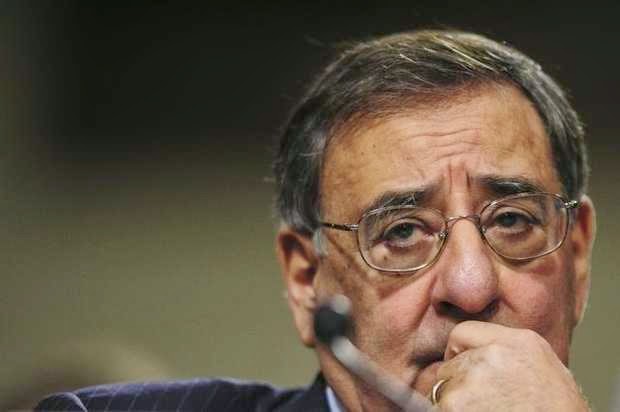
Former CIA Chief and Defense Secretary Leon Panetta. A new Congressional report concludes that the Pentagon IG "bungled" an inquiry into Mr. Pantetta's disclosure of classified information to film makers who produced "Zero Dark Thirty," Hollywood's verson of the hunt for Osama bin Laden. (McClatchy photo)
Flashback to the spring of 2011: SEAL Team 6 had just administered multiple rounds of final justice to Osama bin Laden at his complex in Abbottabad, Pakistan and the Obama Administration couldn't wait to take its victory lap.
Almost immediately, there were disturbing leaks about the unit that had carried out the mission. Special forces operators half-way around the world began worrying about family and friends in Virginia Beach (home of SEAL Team 6), after Vice-President Joe Biden publicly disclosed their participation in the raid. Biden's leak was subsequently confirmed by CIA Director Leon Panetta, who had already been confirmed as the next Secretary of Defense. That didn't set well with the outgoing SecDef (Robert Gates), who recalled "promises" to maintain the operational security that surrounded the mission.
As recounted by Mark Thompson of Time magazine:
“Frankly, a week ago Sunday, in the Situation Room, we all agreed that we would not release any operational details from the effort to take out bin Laden. That all fell apart on Monday — the next day.”
That’s a pretty amazing statement. Here you have the nation’s warlord calling out his senior colleagues inside the Obama Administration for spilling the beans. Although he didn’t name names, there was ire inside the Pentagon at White House homeland security chief’s John Brennan’s Monday on-the-record briefing, which offered far more detail than a background session conducted the same day at the Pentagon. Brennan spoke in front of cameras about bin Laden being protected by female human shields, and implied he was armed — both of which had to be retracted as untrue the next day (the very act of retraction means the speaker had drifted into discussing operational details that had to be…retracted).
And the leaks kept coming when Hollywood got involved; with extensive cooperation from senior defense officials, directory Kathryn Bigelow eventually released Zero Dark Thirty, a dramatization of the long hunt for bin Laden and the mission that finally took him down. During the film's development, there were persistent reports that the Ms. Bigelow and the screenwriter, Mark Boal, had received classified information from Mr. Panetta and other senior leaders. An official complaint was later filed and after that, the media and members of the public quickly lost interest.
Meanwhile, Mr. Panetta went on to serve as President Obama's Secretary of Defense, and Zero Dark Thirty was nominated for a total of five Academy Awards. As for that complaint against Leon Panetta, we are now learning that it was bungled by Pentagon staffers. Senator Charles Grassley of Iowa, one of the few members of that body who seems interested in accountability by government officials, has reviewed the leak investigation and described it as absolutely worthless. McClatchy reporters Jonathan Landy and Marisa Taylor obtained a copy of Grassley's scathing letter to the Pentagon:
Two top officials in the Pentagon Inspector General’s Office bungled an investigation into allegations that former Defense Secretary Leon Panetta and other defense officials leaked classified information to Hollywood filmmakers, a senior Republican senator is charging.
The investigation produced “a second-class report that wasn’t worth the paper on which it was written,” Sen. Chuck Grassley asserted in a scathing Nov. 17 letter to John Rymer, the Defense Department’s inspector general. “The . . . project was an unmitigated disaster spawned by a series of top-level missteps and blunders.”
In the end, Grassley noted, no one has been held responsible more than two years after the leaks to the makers of “Zero Dark Thirty,” a blockbuster film depicting the May 2, 2011, Navy SEALs raid on Osama bin Laden’s hideout in Pakistan.
[snip]
Grassley’s charges were based on an inquiry by his staff into the leak investigation that was overseen by Lynne Halbrooks, the principal deputy Pentagon inspector general who was serving as acting inspector general at the time, and James Ives, a deputy Pentagon inspector general.
The staff cited possible misconduct by the pair that included discussions that Halbrooks held with Panetta and his aides about the investigation while it was still underway. Moreover, the public release of the final report was held up until after Panetta resigned on Feb. 27, 2013.
The delay created “the perception that the report process was slowed by PDIG Halbrooks and others working at her direction to shield DOD officials from scrutiny and perhaps to bolster” a bid by Halbrooks to permanently win the post in which she was temporarily serving, said the staff’s findings.
As the McClatchy reporters dryly note, the incident highlights a "double standard" in how the Obama Administration goes after leakers. Lower-level personnel are aggressively pursued, while high-ranking officials (like Mr. Panetta) get off scot-free.
Borrowing a phrase from Captain Renault in Casablanca, we're "shocked...shocked" to learn that the system goes out of its way to protect the powerful--or for that matter, anyone deemed of value in advancing a key narrative, or covering up alleged misconduct. Does anyone really believe that Ms. Halbrooks and Mr. Ives didn't know they weren't supposed to discuss the investigation with Panetta and his aides while it was underway? (emphasis ours) But they did it anyway, apparently without fear of any long-term consequences from their actions.
At the end of the day, we're left with the knowledge that a senior official willingly divulged classified information to a Hollywood scriptwriter, working on a film that promised to be very favorable for the administration, with a release originally planned to coincide with the 2012 elections (it was later pushed back). And for deliberately ignoring classification rules--and potentially placing American lives in danger--Mr. Panetta didn't even get a slap on the wrist.
Sadly, the defense establishment has a long history of ignoring misconduct by the connected and powerful. At one point in my career, your humble correspondent was the intelligence briefer for an Air Force flag officer who was an unmitigated disaster, both personally and professionally. He bullied his staff; flaunted rules on the use of government transportation and generally did as he damn well pleased. There were also unconfirmed reports that the same individual had two DUI "stops" as a flag officer, but that didn't slow him down, either. We use the term "stops" because there was never any confirmation the general was actually arrested.
Most of us were delighted when the general moved on to a new assignment and we thought his career would finally end following an episode at his new headquarters. Reportedly, he was waiting for a brief from a mid-level officer. who happened to be an African-American woman. Apparently, she was running a bit late; just before the woman entered the room, the general asked loudly--in front of his senior staff: "Where is that g--d----ed black b---h?"
For mere mortals, that moment of undiluted racism would be enough to kill a career. But not this particular officer, who moved on to four-star rank and was dogged by controversy almost until he retired. Incidentally, the incident involving the African-American officer was "thoroughly" investigated by the military. The individual placed in charge of the probe was a mere Colonel, who was given the task of gathering evidence and building a case against a well-connected three star.
You can guess how that turned out. In his report, the Colonel acknowledged the vile comments uttered by the general, which were heard (and affirmed) by his assembled staff. But the Colonel noted that other members of the general's team were subjected to similar behavior, so the racism experienced by the African-American officer was consistent with the experiences of other personnel. Case closed.
Monday, December 01, 2014
Playing with Fire
Ambrose Evans-Pritchard, in the UK Telegraph, on Saudi Arabia's gambit to curb U.S. shale oil production by letting oil prices tumble--a strategy that may quickly backfire:
Saudi Arabia and the core Opec states are taking an immense political gamble by letting crude oil prices crash to $66 a barrel, if their aim is to shake out the weakest shale producers in the US. A deep slump in prices might equally heighten geostrategic turmoil across the broader Middle East and boomerang against the Gulf’s petro-sheikhdoms before it inflicts a knock-out blow on US rivals.
[snip]
Chris Skrebowski, former editor of Petroleum Review, said the Saudis want to
cut the annual growth rate of US shale output from 1m barrels per day (bpd)
to 500,000 bpd to bring the market closer to balance. “They want to unnerve
the shale oil model and undermine financial confidence, but they won’t stop
the growth altogether,” he said.
There is no question that the US has entirely changed the global energy
landscape and poses an existential threat to Opec. America has cut its net
oil imports by 8.7m bpd since 2006, equal to the combined oil exports of
Saudi Arabia and Nigeria.
The country had a trade deficit of $354bn in oil and gas as recently as 2011.
Citigroup said this will return to balance by 2018, one of the most
extraordinary turnarounds in modern economic history.
As Evans-Pritchard writes, the Saudis (and the rest of OPEC) badly misjudged the threat posed by U.S. and Canadian shale oil production; as recently as last year, senior officials in the kingdom were dismissing shale as a flash in the pan--nothing more than a temporary inconvenience for the oil barons of the Middle East.
Now, the Saudis believe falling crude prices--perhaps going as low as $40 a barrel--will force some shale producers to reduce production and lay off workers. But some American firms are one step ahead of OPEC, hedging much of their output for 2015 and 2016 at higher prices, set before the recent drop. Additionally, shale producers can additional wells on line at a much lower cost, since the biggest expenses (including land acquisition) have already been absorbed. That means new wells can remain profitable--even if the price floor dips to around $40 a barrel.
US producers have locked in higher prices through derivatives contracts. Noble Energy and Devon Energy have both hedged over three-quarters of their output for 2015.
Pioneer Natural Resources said it has options through 2016 covering two- thirds of its likely production. “We can produce down to $50 a barrel,” said Harold Hamm, from Continental Resources. The International Energy Agency said most of North Dakota’s vast Bakken field “remains profitable at or below $42 per barrel. The break-even price in McKenzie County, the most productive county in the state, is only $28 per barrel.”
Efficiency is improving and drillers are switching to lower-cost spots, confronting OPEC with a moving target. “The (price) floor is falling and may not be nearly as firm as the Saudi view assumes,” said Citigroup.
[Edward] Morse, commodities chief at Citigroup, says the “full cycle” cost for shale production is $70 to $80, but this includes the original land grab and infrastructure. “The remaining capex required to bring on an additional well is far lower, and could be as low as the high-$30s range,” he said.
Indeed, the economics of cheap crude don't work for Saudi Arabia and most of the world's other oil exporters. The break-even point is $98 a barrel for the House of Saud and even higher for countries like Russia ($105); Iran ($131), Iraq ($111) and Venezuela ($161). Falling oil prices are creating havoc for national budgets that depend on energy exports, and the current trend could prove catastrophic for regimes in Libya, Yemen and even Algeria, which have only a tenuous hold on power.
Meanwhile, regional instability is creating new opportunities for ISIS and other Islamic terrorist organizations, which could gain control of more oil fields in places like Libya and Nigeria. There is also the matter of Iran or Russia formenting new crises, to boost crude prices and force concessions from countries dependent on their energy supplies (read: Western Europe).
All the more reason to accelerate energy production in the U.S., and become a net exporter of crude and natural gas. There is more than a touch of irony in all of this; first, the fracking revolution will achieve what everyone said was impossible--allowing America to become energy independent, with all the power and privileges that come with that status. Secondly, as the oil producers of the Middle East slide further into chaos, they will call on--you guessed it--the United States to rescue them from the fundamentalist forces they unleashed. At what point do we decide enough is enough and tell them to take that proverbial flying leap?
Monday, November 24, 2014
The Fall Guy
Defense Secretary Chuck Hagel is being forced out, after less than two years on the job. The New York Times (which received the initial leak from the White House), gladly served up administration spin that Mr. Hagel, a former Republican Senator from Nebraska, lacked the required skills to deal with emerging threats.
The officials described Mr. Obama’s decision to remove Mr. Hagel, 68, as a recognition that the threat from the Islamic State would require a different kind of skills than those that Mr. Hagel was brought on to employ. A Republican with military experience who was skeptical about the Iraq war, Mr. Hagel came in to manage the Afghanistan combat withdrawal and the shrinking Pentagon budget in the era of budget sequestration.
But now “the next couple of years will demand a different kind of focus,” one administration official said, speaking on the condition of anonymity. He insisted that Mr. Hagel was not fired, saying that the defense secretary initiated discussions about his future two weeks ago with the president, and that the two men mutually agreed that it was time for him to leave.
But Mr. Hagel’s aides had maintained in recent weeks that he expected to serve the full four years as defense secretary. His removal appears to be an effort by the White House to show that it is sensitive to critics who have pointed to stumbles in the government’s early response to several national security issues, including the Ebola crisis and the threat posed by the Islamic State.
To be fair, there is an element of truth in the critique of Chuck Hagel's leadership skills. He was a lousy choice for SecDef at the very moment our military establishment needed an extraordinary leader. As we observed during Mr. Hagel's tortured confirmation process in 2013, he was the wrong man for the wrong job at the worst possible time:
It doesn't take a military genius to understand that DoD desperately needs someone with ideas, exceptional managerial acumen and a road map for America's military forces in the 21st Century. To date, President Obama hasn't offered much, other than winding down the wars in Afghanistan and Iraq (which would have occurred regardless of who was in the Oval Office); his strategic focus on the Pacific theater and massive cuts in the defense budget.
The next Secretary of Defense faces huge challenges. Even without sequestration, the Pentagon is looking at roughly $500 billion in cuts over the next decade, along with cuts in personnel and hardware that will create significant operational obstacles. Good luck taking on a modernized Chinese military with a force that, on its current trajectory, will be completely hollowed out by the end of Mr. Obama's second term.
And we're being told that Chuck Hagel is the right man to lead the Defense Department at this critical moment. How rich. We're not sure if Mr. Hagel ever had a marshal's baton in his knapsack (following Napoleon's famous dictum); at this point, we'd just like to know if he actually has a clue.
To date, Chuck Hagel is the only former enlisted soldier to be appointed as Secretary of Defense. As an Army infantryman in Vietnam, Hagel served honorably, receiving two Purple Hearts and the Army Commendation Medal. But his involvement with the military largely ended when he returned from Vietnam and didn't resume until Hagel entered the U.S. Senate in 1996. As a member of that body, he developed a friendship with Barack Obama, centered on their skepticism about the war in Iraq.
And there's the rub: searching for a replacement for Leon Panetta, the commander-in-chief's primary concern was finding someone with the requisite anti-war credentials and not the vision and leadership needed to lead DoD in an environment defined by the emergence of ISIS; China's growing military might, a resurgent Russia, continued military operations in Afghanistan and sequestration-imposed budget cuts.
It doesn't take a general to understand that dwindling resources translates--quickly--into decreased military readiness, a problem compounded by the so-called "procurement holiday" of the 1990s and a decade of war in the Middle East. In an interview with Charlie Rose last week, Mr. Hagel said senior DoD leaders were openly worried about the situation facing our armed forces (H/T: PJ Tattler):
Hagel re-iterated that to Rose, but also left viewers to wonder about the direction that President Obama is taking the military.
“I am worried about it, I am concerned about it, Chairman Dempsey is, the chiefs are, every leader of this institution,” Hagel said, including Pentagon leadership but leaving both President Obama and Vice President Joe Biden’s names out of his list of officials who are worried about the U.S. military’s declining capability. Hagel said that the Congress and the American people need to know what while the U.S. military remains the strongest, best trained and most motivated in the world, its lead is being threatened because of policies being implemented now.
[snip]
In the past couple of years, Hagel has warned that defense budget cuts implemented under President Obama were hurting readiness and capability. The “how smart you are” line may be a veiled shot at President Obama, who basks in a media image that he is a cerebral, professorial president.
Reportedly, the "professor-in-chief" became miffed when Mr. Hagel recently suggested that ineffective policies against ISIS in Syria were actually aiding that country's dictator, Bashir Assad. The outgoing defense chief has a point, but some would ask if he--and the service chiefs--could have been more forceful in stating their opposition to budget cuts, micro-management of the campaign against ISIS and the President's refusal to acknowledge the threat posed by the terror army until is was almost too late.
And the situation is unlikely to improve under Secretary Hagel's potential successors, Michelle Flournoy, Ashton Carter and Jack Reed. Ms. Flournoy served in senior defense posts in the Clinton Administration and was Under-Secretary of Defense during Obama's first term; Carter was the Deputy SecDef during the same period and Reed is a longtime Democratic Senator from Rhode Island. Early speculation suggests Ms. Flournoy has the inside track, which would allow President Obama to appoint the first female Secretary of Defense.
Of the three, only Senator Reed has served in uniform; after graduating from West Point, he was an active-duty officer from 1971-1979 and remained in the Army Reserve until 1991. Describing him as a doctrinaire liberal would be an understatement.
At this point, it probably doesn't matter who serves as SecDef; Mr. Obama shows no inclination to change his national security policies, and the outlook for defense spending is equally grim. Perhaps the real question is who will be nominated for the job in 2017, as part of the next administration. That individual--whomever it might be--will face a near-impossible job.
Friday, November 21, 2014
Deadline Time
While the media waits for word from the grand jury in Ferguson, Missouri, a much more important deadline is looming.
We refer to the Monday deadline for reaching an agreement on Iran's nuclear program. At this point, the Obama Administration appears determined to reach any sort of deal, regardless of how bad it might be. Writing at National Review, Fred Fleitz warns that any prospective accord may represent little more than a complete capitulation to Tehran:
Many in Congress — both Democrats and Republicans — are coming to the realization that the nuclear talks amount to a dangerous U.S. sellout to Tehran. But few of them realize how far this sellout has gone.
The reported American concessions to Tehran represent a stunning reversal of years of U.S. policy and include implicitly recognizing Iran’s “right” to enrich uranium, allowing Iran to operate 6,000 uranium centrifuges, and dropping longtime Western demands that Iran halt construction of the Arak heavy-water reactor, which will be a source of plutonium when completed. Iran also will not be forced to give up its large stockpile of reactor-grade uranium that currently could be used to make at least eight nuclear weapons if further enriched to weapons-grade.
[snip]
Based on the enormous concessions offered by the United States last fall to get Iran to the negotiating table, further U.S. concessions made during this year’s talks, Iran’s failure to cooperate with the IAEA, and its cheating on the interim agreement, many members of Congress from both sides of the aisle believe that any nuclear agreement struck with Iran will be weak and unverifiable and will do little or nothing to stop Iran from pursuing nuclear weapons.
Mr. Fleitz, a veteran intelligence officer, believes the White House's desperation for any sort of nuclear deal reflects bleak assessments on two fronts. First, there's the realization that Mr. Obama has allowed the world to become a much more dangerous place on his watch, and needs some sort of "accomplishment" to counter-balance a legion of blunders. A nuclear deal with Iran would (supposedly) represent a rare, foreign policy triumph.
Secondly, there appears to be a growing consensus among administration officials--and policy wonks who share their world view--that a nuclear Iran is inevitable, and containment represents the best policy. Those dangerous beliefs, Mr. Fleitz observes, were recently articulated in op-ed pieces by a pair of liberal pundits, Kenneth Pollack of the Brookings Institution and Paul Pillar, a faculty member at Georgetown University. Both are former CIA officers who argue that the threat from a nuclear Iran has been "over-hyped," and can actually be contained, similar to the strategy used for decades against the former Soviet Union.
Both Pollack and Pillar believe it is unlikely that Iran would share nuclear technology--or finished weapons--with other rogue states and terrorist groups. They also claim it would take Iran decades to match Israel's nuclear arsenal, while Jerusalem could easily add to its stockpile and is currently deploying more delivery platforms, including submarines capable of firing cruise missiles.
There are obvious dangers in this line of thinking (and we use that term advisedly). It's a given that Tehran has a much different world view than the Soviet leaders who paraded their weapons through Red Square, but thought very carefully about using them. Iran remains committed to becoming the regional hegemon of the Middle East, and its generally agreed that Tehran would employ nuclear weapons more quickly against such adversaries as Israel--or U.S. military forces in the Persian Gulf.
And, having used terrorist proxies to fight its foes for more than 30 years, why should anyone doubt Iran's willingness to share nuclear technology with them, particularly when the U.S. has a long history of casting a blind eye towards enablers of nuclear ambition (think Pakistan). Beyond that, Tehran may also believe it has the Obama Administration over a proverbial barrel. In exchange for its "assistance" with ISIS in Iraq and Syria, the mullahs probably expect even more flexibility from Washington on the nuclear issues.
At this point, it's still unclear if a deal will be reached by the Monday deadline. But regardless of when an agreement is struck, it will be--almost assuredly--a terrible bargain, one that will likely codify Iranian gains, and put Tehran even closer to getting the bomb. That, in turn, will trigger an even wider arms race in the Persian Gulf, as erstwhile American allies scramble to defend themselves, believing that Washington is no longer a reliable partner.
That will be one of the lasting legacies of Barack Obama. As for Republicans, they certainly talk a good game, but offer little in the way of an alternative. Readers will note that GOP members of Congress left town this afternoon for their Thanksgiving break, saying almost nothing about Monday's deadline and what Mr. Obma is about to do.
Tuesday, November 11, 2014
Keeping Watch
On this--and every--Veteran's Day, there will parades and speeches and expressions of gratitude for those who served and those who still wear the uniform.
But sometimes, the day' s real meaning is reflected in quiet moments, far removed from the official celebration. Over at FreeRepublic.com, someone posted a remarkable photo that captures the essence of service, sacrifice and gratitude:

It was taken by three years ago by amateur photographer Frank Glick, at Fort Snelling National Cemetery in Minneapolis. Running ahead of schedule on his morning commute, Glick took a detour through the cemetery and spotted the bald eagle, sitting atop a veteran's tomb stone. He grabbed his camera and captured a timeless reminder of those who gave so much in the cause of freedom.
Since then, the photo has gone viral, and rightfully so. Minneapolis Star Tribune columnist Jon Tevlin wrote a 2011 column about the photographer, and the World War II soldier whose tombstone provided a perch.
Monday, November 10, 2014
Spies in the Land
It's been a rough week for key members of the terrorist networks in Syria and Iraq.
Last Wednesday, a U.S. airstrike successfully targeted David Drugeon, the French defector who had emerged as one of the leading bomb makers for Khorasan Group, a collection of Al Qaida veterans who are now fighting in Syria. More from the Long War Journal:
Video surfaced on Facebook late Nov. 5 alleging to show the aftermath of a United States airstrike in Idlib. A number of recent airstrikes, as we now know, were targeting the Khorasan Group, a collection of al Qaeda veterans embedded within the Al Nusrah Front.
US Central Command announced that "US military forces conducted airstrikes last night against five Khorasan Group targets in the vicinity of Sarmada, Syria, using bomber, fighter and remotely piloted aircraft" in a press release yesterday.
"We are still assessing the outcome of the attack, but have initial indications that it resulted in the intended effects by striking terrorists and destroying or severely damaging several Khorasan Group vehicles and buildings assessed to be meeting and staging areas, IED-making facilities and training facilities," the release continued.
Fox News reported that David Drugeon, a French defector to al Qaeda and a master bomb maker, was targeted in the airstrikes.
"The drone struck a vehicle traveling in Syria's Idlib province that was believed to be carrying Drugeon. The driver of the vehicle is thought to have lost a leg and was expected to die, according to sources with knowledge of the operation. A second person thought to be Drugeon was killed, according to well-placed military sources," Fox News reported.
Friday, November 07, 2014
An Abundance of Caution
**UPDATE//4:05 pm** Medical officials in Charleston now say the C-17 pilot is at "no risk" of having Ebola, based on his lack of contact with "anyone in Liberia." The Air Force officer has been removed from isolation, though he apparently remains hospitalized with flu-like symptoms.
***
A point worth repeating: since the beginning of the U.S. military mission to Ebola-ravaged areas of West Africa, we've been told that service members face a very low risk of infection. Their mission is focused on a variety of support functions, including security, logistics, and the establishment of new treatment centers. Military personnel are not supposed to come in contact with actual Ebola patients, a line echoed by various officials at the White House and the Pentagon.
And events on the ground seemed to support that claim. A number of troops (mostly Army and Air Force) have already returned from Liberia, and so far, none have been diagnosed with Ebola. However, it is worth noting that DoD has mandated a 21-day monitoring period for all personnel returning from West Africa, based on the now-familiar "abundance of caution."
But others--including this blog--have argued that the Ebola mission subjects our service members to unnecessary dangers, given the limited training that most received before deployment--and the inevitability that a solider, sailor, airman or Marine will eventually come in contact with an infected individual, and contract the deadly disease.
That's why today's news out of Charleston, SC, is disturbing. From WCSC-TV:
A pilot with the 437th Airlift Wing who flew a mission to West Africa on Oct. 23 and began experiencing "flu-like symptoms" this week is being screened for Ebola at the Medical University of South Carolina, according to Joint Base Charleston.
The serviceman, who lives off-base, began experiencing the symptoms on Wednesday, according to Staff Sgt. Anthony Hyatt.
While health officials believe he is an extremely low risk for Ebola, Joint Base Charleston coordinated with the state's Department of Health and Environmental Control to exercise "the appropriate protocols and an abundance of caution," Hyatt said.
The patient recently returned from a three hour stay in Liberia during which time he did not leave the plane, according to Mark Plowden, Communications Director for DHEC. The hospital activated their Ebola protocols after it was contacted Thursday night by DHEC regarding a patient requiring Ebola medical screening.
Other crew members who have traveled in the region are monitored for 21 days, and so far, only the pilot in question has shown any adverse symptoms," Hyatt said.
"The risk of Ebola is extremely low," said Plowden in a statement. "However, MUSC is following protective protocol as a precautionary measure."
At this point, it's quite likely the pilot is suffering from something other than Ebola. But, given his symptoms (and recent stop-over in Liberia), activation of the protection protocols was required.
And what if it is Ebola? (God forbid). That might prompt a re-examination of how the mission is being conducted and supported.
For starters, the pilot's potential exposure should have been minimal. Information provided by the Air Force indicates that the pilot never left the flight deck during his three hour-stopover in Liberia on 23 October. The engines of the C-17 remained running while the aircraft was on the ground and the crew had no contact with Ebola patients. American personnel who serviced the aircraft and unloaded its cargo self-monitor for Ebola symptoms twice daily, and the airfield where the C-17 transited is under the control of the U.S. military.
An Air Force spokesman also confirmed that the crew did not consume any food from Liberia while the plane was on the ground, saying there "many layers of separation" to protect the pilot and his fellow crew members.
Still, we don't know all the details of the C-17 deployment. Airlift crews typically deploy for more than a week at a time, with multiple sorties along the way. After leaving Liberia, it's quite likely the C-17 stopped at bases in Europe before flying back to the U.S. In fact, we don't know how much time elapsed between that stopover in Liberia and the C-17's return to Charleston. Obviously, a longer gap would mean the pilot was exposed to more people in multiple locations, which could create massive public health headaches--if the pilot was somehow exposed to Ebola.
There's also the matter of the aircraft. Most likely, the Globemaster III departed again within a day or two of its landing at Charleston--in the hands of another crew. So far, the Air Force hasn't disclosed where the jet has been since the air crew returned to the U.S.--or what steps would be taken if a crew member was subsequently diagnosed with Ebola.
Wednesday, November 05, 2014
About Last Night
A couple of observations from last night's GOP blowout:
1) Everyone--except Ed Gillespie--missed Virginia. While I'm not a card-carrying member of the political pundit/consultancy class, but I've been to the election rodeo (as a reporter and volunteer) more than a few times. And like a lot of folks in the Old Dominion, I pronounced Mr. Gillespie's Senate campaign as officially D.O.A. shortly after Labor Day. At that point, incumbent Democrat Mark Warner and his surrogates had been attacking Gillespie on the airwaves for months, depicting him as an Enron lobbyist (and worse). He was trailing in the polls by double-digits and his first, sustained wave of TV ads didn't start until September.
So, how did an underfunded--and some would say, lackluster--campaign put Mark Warner into a likely recount? First, Mr. Gillespie carefully picked his spots. With less available money than Warner, he entered the Washington, D.C. television market late in the race, but made it count. When the Redskins appeared on Monday night football, he aired a spot suggesting that the U.S. Senate had better things to do than trying to force a name change on the NFL franchise. The ad aired only once, but saying it resonated among the throngs of Redskins fans in northern Virginia would be a gross understatement.
Gillespie also ran a largely, upbeat, issues-focused campaign that was designed to appeal to independents. Exit polling showed the GOP challenger ran only one point behind Warner in that group; in 2008, the Democrat carried that group by 36 points. Mr. Gillespie, a former RNC chair and Bush Administration official, also benefited from local and national trends. Obviously, a lot of voters on the fence broke for Republicans in the campaign's final days, and it boosted Gillespie's run in Virginia. So did a strong performance by Barbara Comstock, who captured the northern Virginia congressional seat held for decades by Frank Wolf, who is retiring. Democrats still got a lot of votes out of Arlington and Fairfax County--probably giving Warner the narrow lead he now holds.
But Gillespie far out-performed recent GOP candidates in the D.C. exurbs and Virginia Beach, the largest city in the state. Early exit data showed Mr. Gillespie with a 10-point advantage in Virginia Beach, which has a huge population of military members and veterans. Mitt Romney carried the same area by only two points in 2012.
Trailing by a fraction of a point, Gillespie should request a recount. His prospects of winning are probably low, given Democrats' amazing ability to manufacture more votes when results are re-tabulated. But with last night's stunning performance, Gillespie becomes an early favorite in the 2017 Virginia governor's race. As for Mark Warner, the list of possible Democrat VP nominees in 2016 has grown shorter. By one name.
2. Vote for Us--We're the Reason You're Back Home with Mom and Dad. After President Obama's victories in 2008 and 2012, Democrats bragged about their ability to target and mobilize key segments of the electorate, including millenials, gays, unmarried women and minorities. With America's changing demographics, the Obama coalition was thought to be durable and built-to-last, ensuring Democrats of electoral pluralities for years to come.
So, with control of the Senate hanging in the balance, Democratic strategists went back to the well in 2014, going after so-called "basement grads" who had voted for Obama at least once before. The group consists of young college grads who came of age during the economic recession that began in 2007. As their name implies, many have been forced to move back in with their parents because of limited job prospects.
Douglas Belkin of The Wall Street Journal recently detailed Democrats' courting of basement grads:
Politicians, particularly Democrats, are courting these millennials who came of age during the recession, entered college at a time of soaring tuition and find themselves burdened with record student debt and soft job prospects. All too often their paths include a post-college stint living in their parents’ basements.
Saul Newton, a 26-year-old Army veteran who left college to join the military, said he was shocked to be billed for his student loans while he was deployed in Afghanistan. “That served as a wake-up call about how unfair the system really is,” he said.
[snip]
At least half a dozen Democratic House candidates are running TV ads devoted to the issue, as are at least two Democratic senators and two GOP House candidates. Outside groups attacking Republicans also are piling in. During the second week of October, Democrats outspent Republicans on TV ads on education by more than four to one, according to the Cook Political Report and Kantar Media.
As a political strategy, basement grads were a flop. There was plenty of polling before the election that suggested that millennials weren't interested, and their turnout would be well below the levels of 2008 and 2012. Looks like the jobless Obama recovery kept a lot of them at home in election day.
Placing your electoral hopes on groups that have been hurt your party's economic policies isn't exactly a winning hand.
Monday, October 27, 2014
More Medevac from the Hot Zone

An Air Force C-17. The Pentagon plans to acquire airborne isolation chambers which can be loaded onto the transport and airlift up to a dozen troops or aid workers infected with Ebola, to treatment facilities around the world. (USAF photo via Army Times)
***UPDATE//28 October//Fox News has obtained a draft State Department memo outlining plans for bringing non-citizens to the U.S. for Ebola treatment--a document the government has tried to disavow. This revelation raises new questions about the actual purpose for those military isolation pods, and who will be evacuated from affected areas.
***
When the Obama Administration announced plans to send troops to West Africa to battle the Ebola crises, we were told that military personnel would face minimal risks. They wouldn't be treating actual patients we were assured; instead, the mission would focus on building new treatment centers, training local health care workers and handling related tasks, including logistics and security.
So, if the chances of contracting the deadly disease are low, why is the Pentagon developing its own, portable isolation units that can be loaded into military transports, and remove more infected individuals from the hot zone?
From USA Today, courtesy of Drudge:
As more U.S. troops head to West Africa, the Pentagon is developing portable isolation units that can carry up to 12 Ebola patients for transport on military planes
The Pentagon says it does not expect it will need the units for 3,000 U.S. troops heading to the region to combat the virus because military personnel will not be treating Ebola patients directly. Instead, the troops are focusing on building clinics, training personnel and testing patient blood samples for Ebola.
"We want to be prepared to care for the people we do have there just out of an abundance of caution," Defense Department spokeswoman Jennifer Elzea said.
[snip]
The Pentagon's transportation system will allow the Air Force to use C-17 or C-130 transport planes to carry up to eight patients on stretchers or 12 patients who are able to walk, said Charles Bass, a Defense Department chemical engineer working on the project.
Elzea said the cost of the units couldn't be provided as the final contract for the project is still under negotiation.
Bass, a former Army officer, said the units are key to providing peace of mind to U.S. troops in Africa.
"It's important when you're on deployment that you feel that someone has your back," he said. "(It) adds confidence to the people who are deployed."
Recent evacuation flights of western aid workers and journalists with Ebola have been conducted by Phoenix Air, a private firm that has the only medically-approved means of air transport for patients with the deadly disease. The company charges $200,000 for each flight, and has conducted a dozen Ebola medevac missions since July, flying westerners from Africa to treatment centers in the U.S. and Europe.
Why not stick with Phoenix Air? After all, the risk for deployed personnel is said to below, and the Cartersville, Georgia firm has obvious expertise in the dangerous mission--and a long-standing relationship with DoD. Among other services, Phoenix Air provides range surveillance, electronic attack and radar/communications jamming to the U.S. Navy and other military clients. The Pentagon can certainly afford the price tag, and the potential evacuation of military personnel is already covered under an existing contract between the aviation firm and the U.S. State Department.
Apparently, the Defense Department wants the capability to transport more patients on each flight--if necessary. The isolation chamber on Phoenix Air's specially-equipped business jet can handle only a single individual, under the care of a doctor and two nurses wearing full protective gear. As reported by USA Today, chambers that will be fitted into a C-130 or C-17 can accommodate up to 12 ambulatory patients, or eight on stretchers.
This much is certain: the military option won't save the government any money. At an estimated operating cost of $23,000 per flying hour, a round-trip C-17 flight between the east coast and West Africa will run the taxpayers $414,000--and that doesn't include the cost of the isolation chamber, or the medical crew required for the mission.
To be fair, creating the Air Force medevac option makes a certain degree of sense. With the Ebola crises expected to worsen in the most-affected areas, requirements for airlifting western aid workers and military personnel may increase beyond the capabilities of Phoenix Air. If saving your life requires transport to a hospital in the United States or Europe, the arrival of a specially-equipped Hercules or Globemaster III would be a welcome sight, indeed.
On the other hand, the Pentagon's crash program to develop this capability raises new questions about the situation in West Africa, and the threat being faced by our military personnel. DoD would not invest the time and money to build airborne isolation chambers--and train crews for the Ebola medevac mission--if there was no need for the expanded capability. This may be nothing more than preparing for a worst-case scenario, but (given the government's track record on Ebola so far), developing these mission "assets" is hardly reassuring when it comes to the potential spread of the disease, and our service members becoming infected.
***
ADDENDUM: While the U.S. government refuses to implement mandatory isolation requirements for travelers coming from West Africa, it's a different story for our military. CBS News reports that 11 soldiers who just returned from Liberia--including the commander of U.S. Army in Africa--have been placed in isolation for 21 days at Vicenza, Italy. The Pentagon calls it "enhanced monitoring" and it will apparently be standard policy for all military members returning from the Ebola mission.
Thursday, October 23, 2014
View from the Turret

A knocked-out Sherman tank, somewhere in France in 1944. The hole in the front was made by a German 88mm shell that passed through the tank and blew out the back (photo from worldoftanks.com)
Readers of this blog know that your humble correspondent is hardly a cinema maven; I can count my trips to the theater over the last five years on one hand, with at least one finger left over. Most of those movies were selected by Mrs. Spook, or involved one of the grandkids, so the odds of finding me at the local multiplex--for a movie I actually want to see--are pretty slim.
However, I'll probably make an exception for Fury, the Brad Pitt World War II film that debuted last weekend. Fury is the story of an American tank crew, in the closing days of that conflict. Pitt plays Staff Sergeant Don "Wardaddy" Collier, the commander of an M-4 Sherman tank. Collier and his crew have been together since the North Africa campaign and have never suffered a single casualty. With Nazi Germany tottering on the brink of defeat, the crew entertains the faint hope they may actually survive the war, and they look to Collier to lead them through.
But of course, duty calls. Their tank, nicknamed Fury, is part of a Sherman platoon sent to hold a vital intersection behind enemy lines. The unit encounters a German Tiger tank, which destroys the other Shermans while Fury is disabled by a land mine. Despite the fact that 300 enemy infantrymen are approaching their position, Collier refuses to abandon the mission, and sets about plotting an ambush, leading to the film's climactic scenes.
Borrowing a narrative device from countless other war films, director David Ayer inserts a "new" soldier into Collier's tight-knit crew, creating the usual friction between the veterans and the rookie. Fury's newcomer is Private Norman Ellison (played by Logan Lerman). Ellison is a former clerk, pressed into service as an assistant driver when his predecessor is killed in battle. As his first duty, Ellison must remove the dead man's body from the tank.
From what I've heard, Ayer's film is both bloody and raw, and that's a fairly apt description of tank warfare in World War II. As we've noted in previous posts, Allied tank losses during the drive from Normandy to Germany were horrendous.
My father's old outfit, the 3rd Armored Division, came ashore less than two weeks after D-Day, with a complement of 232 tanks, virtually all of them Shermans. By the time the Nazis surrendered 11 months later, the division had lost more than 700 M-4, a cumulative loss rate of more than 600%. Losses among tank crews were equally high; at the start of the Battle of the Bulge (December 1944), U.S. armored units were so short of tank crews that infantry replacements were pressed into service as tankers. Some were sent into battle against experienced German units with only eight hours of training, and most had never been inside a tank before their one-day orientation session. So, there is clearly a precedent for soldiers from other branches being trained for armored duty and sent into battle with virtually no preparation.
In some respects, Fury is probably overdue, since it's the only World War II film of recent memory that takes audiences inside the tank. I've read that the replica used for interior shots was only slightly larger than that of an actual Sherman, so viewers may gain an appreciation of the claustrophobic conditions that tankers operated under.
They should also get a sense of the daunting odds faced by Sherman crews on the battlefield. At the time of its introduction in 1942, the M-4 could easily match German tanks on the battlefields of North Africa. Two years later, the Sherman was at a distinct disadvantage against the larger Panther IV and Tiger I/II tanks operated by enemy Panzer units. Equipped with a deadly 88mm main gun, the Tiger totally outclassed earlier model Shermans (which carried a 75mm gun) and it was superior to later M-4 variants, which featured a 76mm main gun. Ironically, most Panthers also carried a 75mm main gun, but with a longer barrel and more powerful powder charge, the German gun had a much higher muzzle velocity, enabling it to easily penetrate the Sherman's rather thin armor.
How did we win the war with an inferior tank? It was combination of factors, including Allied dominance in the air; our remarkable ability to produce--and repair--tanks, and of course, the courage and determination of the men who crewed those Shermans.
By the time U.S., British and Canadian armored columns broke out of Normandy and began their charge across western Europe, the Luftwaffe had virtually disappeared from the skies of France, Belgium and the Netherlands. Most of Germany's remaining fighters were reserved for defending the homeland against huge raids by American and British bombers. Meanwhile, U.S. P-47s, P-38s, P-51s and RAF Typhoons roamed over the countryside, decimating Nazi armored formations.
The Allies also benefited from the genius of American war production. While Germany's Panther IV and Tiger tanks were technical marvels, they were also difficult to produce. The Third Reich built only 8,000 of both, and the total Tiger output was less than 2,000. Meanwhile, the U.S. built almost 50,000 Shermans, more than enough to equip our own forces and other Allied nations as well.
For all of its faults, the M-4 was also much more reliable and easier to fix. Shermans that suffered moderate damage were usually towed to a maintenance unit, quickly repaired and returned to service. My father was the NCO in charge of a platoon of tank retrievers in the 3rd Armored Division. During their time in combat, they pulled a lot of damaged tanks to the repair point, and if a crew wasn't available, they were trained to drive them back to the armored unit that needed a replacement.
My father, who turns 99 in a few days, has never been shy about sharing his experiences in the Army, from his days as a peacetime draftee at Camp Polk, to his time in Germany after the war ended. But he rarely speaks about the process of repairing knocked-out tanks; that's because maintenance personnel had the unenviable task of cleaning out the inside and removing any remains that might have escaped the medics or the casualty collection teams. Once the clean-up was completed, one of the first orders of business was to repaint the tank's interior; the odor from fresh paint tended to obscure the smell of burned equipment and flesh that sometimes lingered inside.
Dad always speaks of the tankers with a great deal of respect, even recounting an incident when a Sherman crew picked a fight with some of his men. He understood the odds they faced--and the fact that many never made it home. That's why I believe Fury is worth a look; as World War II fades further into the mists of history, the film gives us another glimpse of the men who fought and died for each other, and saved the world in the process.
***
ADDENDUM: Some less-than-flattering reviews from a U.S. Army officer and the eminent British military historian Max Hastings.
Subscribe to:
Posts (Atom)